

Inside Ethereum’s architectural rethink and what it means for user security and decentralization. Ethereum’s Core Promise and the 2017 Stance When Ethereum first launched, Vitalik Buterin and the core developers debated how best to balance performance, capacity, and decentralization. One of the central tradeoffs revolved around how users verify the correctness of the blockchain. In […]
When Ethereum first launched, Vitalik Buterin and the core developers debated how best to balance performance, capacity, and decentralization. One of the central tradeoffs revolved around how users verify the correctness of the blockchain. In 2017, Buterin described the idea of every user independently verifying the entire blockchain history as unrealistic, dismissing it as a “mountain man fantasy.” Under that view, everyday users would rely on intermediaries such as hosted nodes or remote procedure call (RPC) services to interact with the network without running a full validator or historical node themselves.
This tradeoff was rooted in design debates about whether Ethereum should store the entire state of the blockchain on-chain or rely on more compact representations that could be reconstructed from transaction histories. Ethereum chose a hybrid model that stores a state root in each block header along with Merkle style proofs, allowing users to check specific balances or data without holding the full history, as long as they trust the consensus has been followed honestly.
Nearly a decade later, advances in technology and real-world risks have led Buterin to revise his stance. In a new post, he stated clearly that he no longer agrees with his 2017 tweet and now emphasizes the importance of self-hosted or local verification as a non-negotiable fallback for users.
One key reason for this shift is the maturation of zero-knowledge proof systems especially zk-SNARKs and related tools. These cryptographic primitives allow systems to prove correctness without re-executing every single transaction on a device. In practice, this means even lightweight devices could verify that the Ethereum blockchain is accurate and that they haven’t been fed false state data by a third party. This makes local verification increasingly feasible for ordinary users, without sacrificing performance to the same degree it might have years ago.
Another important factor shaping Buterin’s thinking has to do with fragility. When users must trust an external service to supply blockchain data, several failure modes arise:
Hosted services might become unavailable due to network issues or cost pressure.
Validator concentration could make it harder to assume an “honest majority.”
Censorship pressures such as regulatory intervention around certain smart contracts like Tornado Cash could limit access to unbiased chain data.
Because of these real-world factors, Buterin notes that having a credible fallback way to verify the blockchain the so-called “mountain cabin” option changes the incentive structure. Even if most users never use a local verifier, its existence limits the leverage of intermediaries and reinforces decentralization.
So does this admission mean Ethereum is suddenly insecure or at risk? Not exactly. However, it does highlight how important system design choices continue to be as Ethereum scales and evolves. Here are a few implications of Buterin’s rethink:
One of Ethereum’s core values has always been to prevent single points of failure and intermediaries gaining disproportionate control. By promoting local verification, Ethereum reinforces decentralization and reduces reliance on large node operators. If users can independently verify state without trusted services, the network becomes more resilient to censorship and outages.
Ethereum’s roadmap has increasingly incorporated zero-knowledge proofs and “light client” designs that allow smaller devices (like phones or low-resource computers) to sync securely with the blockchain. These solutions aim to give everyday users strong cryptographic guarantees without the hardware requirements of a full historical node.
One ongoing challenge is how Ethereum balances lean nodes with verifiability. Strategies like statelessness and state expiry aim to reduce storage burdens on individual nodes, but they must ensure that verification remains possible without excessive trust assumptions. The evolving story underscores that decentralization isn’t just a philosophical goal it has practical implications for network robustness under stress.
For most users who interact with Ethereum through wallets and third-party services, this design rethink won’t immediately cause funds to vanish or networks to collapse. The broader protocol remains secure, and highly skilled developers are building verification tools into the ecosystem’s roadmap. But the conversation around local verification and fallback options is a wake-up call about trusting intermediaries too much.
With censorship risk, service outages, and validator centralization lingering on the horizon, Ethereum’s long term health may increasingly hinge on whether users can independently verify the truth of the blockchain when they need to. This debate and the tools it inspires could make the next generation of decentralized apps even more secure and resilient.
Vitalik Buterin’s admission of a major design rethink isn’t an indictment of Ethereum but a reflection of how complex systems evolve over time. As cryptography improves and real-world threats emerge, even the fundamental assumptions of a decade-old project deserve scrutiny. By advocating for stronger user verification and support for new proof models, Ethereum may emerge more robust, decentralized, and capable of weathering future challenges.
In the end, decentralization isn’t merely a technology it’s an ongoing commitment to empower users and resist undue concentration of power. Ethereum’s latest architectural dialogue shows that even foundational ideas can evolve for the better.

Iran’s Five Demands Show This War Is Moving Further From Peace, Not Closer
1 min read · 25 Mar 2026

A $200 Billion Iran War Bill Shows Just How Big The Stakes Have Become
1 min read · 23 Mar 2026

War Between the U.S., Israel, and Iran Escalates as Conflict Enters Third Week
1 min read · 16 Mar 2026

Venice Biennale Under Fire Over Russian Presence
1 min read · 14 Mar 2026
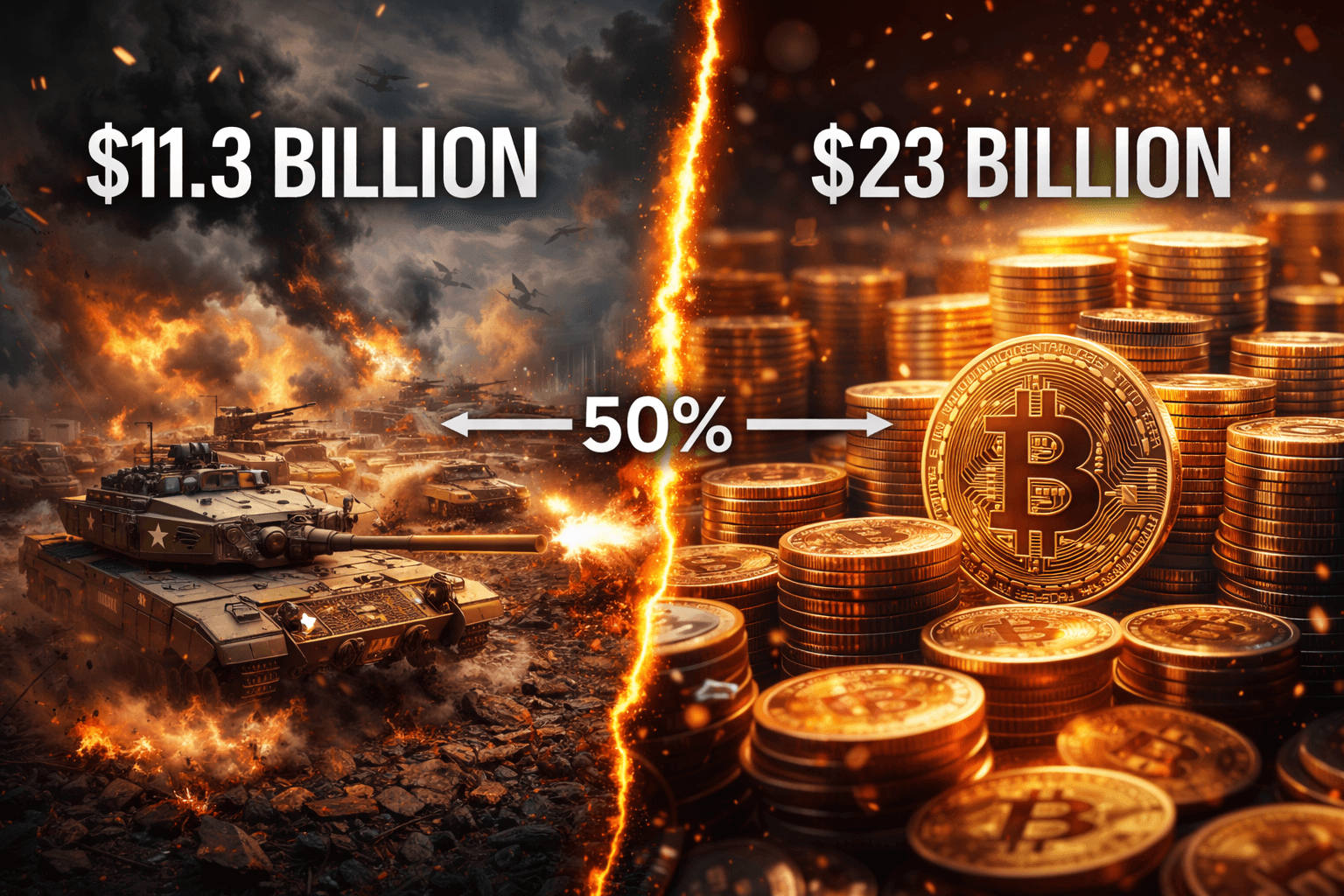
Iran War Spending Equals Half the Value of the U.S. Bitcoin Reserve in Just Six Days
1 min read · 14 Mar 2026

Prosecutors Push to Retry Tornado Cash Co-Founder Even as Washington Softens on Crypto Privacy
1 min read · 12 Mar 2026

Forget CPI and ETFs Oil Prices May Now Be the Biggest Signal for Bitcoin
1 min read · 8 Mar 2026

How SK Telecom Is Rebuilding Itself Around AI at MWC 2026
1 min read · 3 Mar 2026

Dubai and the UAE on the Frontlines: How the Iran Israel Conflict Has Reverberated Across a Global Hub
1 min read · 3 Mar 2026

US and Israel Military Strikes on Iran and the Escalation of Conflict in the Middle East
1 min read · 28 Feb 2026