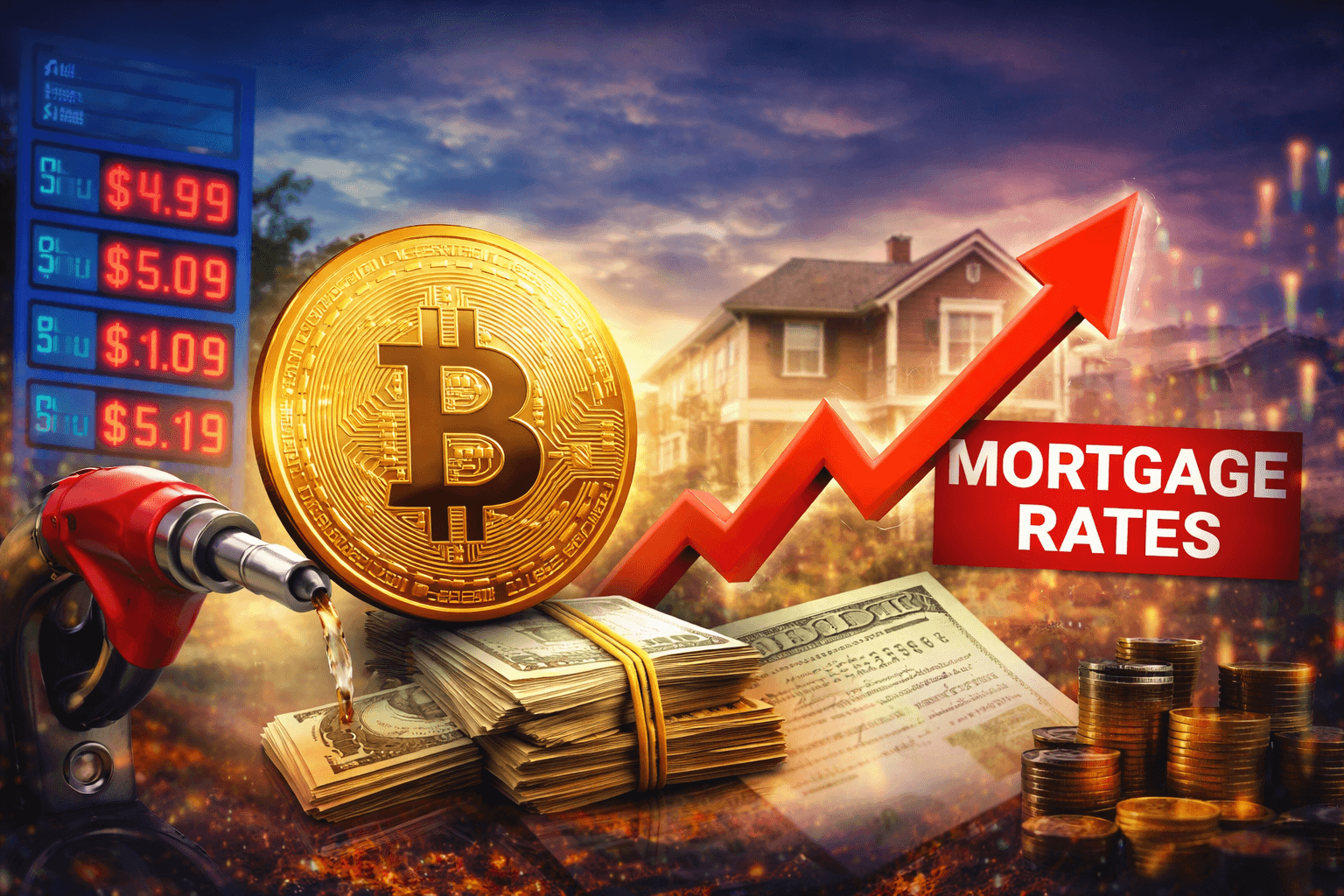

The pressure on Bitcoin is not coming from crypto it’s coming from the real economy. It Starts At The Pump The chain reaction begins with energy.When gas and oil prices rise, households feel it immediately. Fuel is one of the most visible costs in the economy, and when it spikes, it quickly feeds into broader […]
It Starts At The Pump
The chain reaction begins with energy.When gas and oil prices rise, households feel it immediately. Fuel is one of the most visible costs in the economy, and when it spikes, it quickly feeds into broader inflation expectations.
That inflation pressure spreads fast from transport to food to everyday goods pushing the cost of living higher across the board.
Once inflation expectations rise, central banks react. Higher inflation means higher bond yields and higher interest rates, including mortgages.This is where things start to matter for Bitcoin.
When mortgage rates rise, household budgets get squeezed. At the same time, higher interest rates make safer assets like bonds more attractive, pulling money away from riskier investments.
Bitcoin is now deeply tied to global financial flows. That means when the macro environment tightens, crypto feels it too.
Higher rates = tighter liquidity Tighter liquidity = less risk appetite
Historically, that leads to pressure on Bitcoin and other risk assets, especially when markets start pricing in fewer rate cuts.
Recent market data reflects that shift. Treasury yields have climbed, mortgage rates have followed, and capital flows into Bitcoin ETFs have flipped from inflows to outflows in a matter of days.
This is the key shift most people miss.Bitcoin is no longer just a fringe asset. It is now influenced by real-world household economics.
When people are paying more for fuel and mortgages:
They have less disposable income They take fewer financial risks They are more likely to move into safer assets
At scale, that changes the entire market dynamic.
The bigger picture is this:
Bitcoin is behaving less like an isolated digital asset and more like a macro-sensitive financial instrument.
It still has long-term narratives around inflation hedging, but in the short term, it reacts strongly to financial tightening and economic stress.
And right now, the macro signals are clear:
Rising fuel costs Rising inflation expectations Rising interest rates
That combination is one of the toughest environments for risk assets.
Bitcoin holders are now part of the global economy in a very real way.What happens at the petrol pump, in mortgage markets, and in central bank meetings is no longer separate from crypto. It’s directly connected.And as the market continues to mature, those connections are only getting stronger.Bitcoin is not just reacting to crypto anymore. It’s reacting to the world.
-300x200.png&w=3840&q=75)
The CLARITY Act fight shows banks are worried about stablecoins, not just crypto
1 min read · 9 May 2026
-300x200.png&w=3840&q=75)
The SEC’s crypto shift is really about whether old market rules can bend without breaking
1 min read · 8 May 2026
-300x200.png&w=3840&q=75)
Coinbase’s $300B dream still has to pass the boring infrastructure test
1 min read · 7 May 2026

Zcash’s rally shows privacy crypto is no longer hiding in the corner
1 min read · 7 May 2026
-300x200.png&w=3840&q=75)
Safe DeFi now starts with asking what can break before your money goes in
1 min read · 6 May 2026
-300x200.png&w=3840&q=75)
The CLARITY Act fight is really about who gets to hold the next dollar
1 min read · 6 May 2026
-1-300x200.png&w=3840&q=75)
Ethereum staking is becoming a Wall Street balance sheet business
1 min read · 5 May 2026

Bitcoin’s next test is not crypto, it is the bond market
1 min read · 4 May 2026

The stablecoin deal is really about who controls the next financial system
1 min read · 4 May 2026
-1-300x200.png&w=3840&q=75)
Dormant Ethereum wallets show the danger of old crypto secrets
1 min read · 1 May 2026