

Why Ethereum staking at 30 percent supply feels like strong conviction but may be hiding real risks Ethereum has just reached a major network milestone. More than 36 million ETH nearly 30 percent of the circulating supply is now locked in staking on its proof-of-stake blockchain, representing over $118 billion in value at recent prices. […]
Ethereum has just reached a major network milestone. More than 36 million ETH nearly 30 percent of the circulating supply is now locked in staking on its proof-of-stake blockchain, representing over $118 billion in value at recent prices. That impressive headline figure suggests that holders are locking up vast amounts of ETH, supporting network security, collecting yield, and signalling long-term conviction about the world’s second-largest cryptocurrency.
But there is an important caveat. Some analysts warn that this headline number does not tell the full story. While it is true that almost a third of all ETH is locked up, the distribution of that stake is heavily skewed toward a handful of wallets and large validators. That means the simple figure of “30 percent staked” might overstate the level of broad confidence among independent holders and understate concentration risks that come with large whales and institutional stakers dominating the landscape.
This article explains why Ethereum’s staking milestone matters, what it means for the network and broader markets, why one whale might be skewing the signal, how staking could affect liquidity and price, and why investors need to look beyond headline percentages to understand where ETH really stands.
When Ethereum transitioned from proof-of-work to proof-of-stake after “The Merge,” staking became the mechanism by which the network is secured. Instead of miners using energy-intensive hardware to secure blocks, validators lock up ETH as collateral to process transactions and attest to new blocks. In return, they earn rewards similar to earning interest for helping maintain network integrity.
With approximately 36 million ETH now staked, the proportion of total supply dedicated to staking has surged. This happens for several reasons:
Network security and decentralisation: A higher stake generally means greater economic security for the network because an attacker would need to control a much larger share of the stake to try to compromise the chain. More ETH staked points to deeper economic buy-in and a larger barrier to attack.
Yield incentives: Staking rewards typically between roughly 2.5 percent to 3 percent APY depending on conditions attract holders who want to earn passive income rather than let their ETH sit idle. These rewards provide an incentive for long-term holders to lock up coins.
Reduced liquid supply: With a large portion of supply locked in staking, less ETH is available for trading on exchanges. In theory, this reduced selling pressure could put structural support under prices if demand remains strong.
These factors suggest that staking is maturing and that Ethereum’s financial ecosystem is evolving. But deeper examination shows that the headline number of staked ETH doesn’t capture the whole picture.
The simple signal of “30 percent staked” implies widespread participation and support. Yet stake distribution data reveal that a disproportionate amount of that staking power belongs to large entities and whale wallets rather than small individual holders.
Large staking pools dominate: Protocols like Lido Finance hold roughly 24 percent of all staked ETH, and other major pools such as Binance and Coinbase control significant shares. This means a few entities wield a large slice of the network’s validator power.
Whale dominance: Some whale wallets and large institutional actors have staked millions of ETH at once, significantly affecting the total. These large stakeholders can distort signals that traders and analysts might interpret as broad community confidence.
Validator consolidation: Recent upgrades like the Pectra update have allowed validators to consolidate large positions (up to 2 048 ETH per operator), which, while improving efficiency, also amplifies concentration risk by reducing the diversity of validators.
This concentration has real implications. If a small number of large stakeholders control a significant share of the total stake, network governance and economic incentives could tilt toward their interests, raising questions about how decentralized the network truly is.
The fact that so much ETH is staked has repercussions for liquidity. As more ETH enters staking contracts, the amount of ETH available on exchanges and in active circulation declines. That can have several effects:
Price support and volatility: A smaller liquid supply, all else equal, means that large buy orders have more price impact, potentially increasing volatility. But it also means less selling pressure from long-term holders who are earning staking rewards instead of trading.
Less exchange supply: A recent on-chain alert showed whales withdrawing ETH from centralized exchanges before staking new amounts. When ETH leaves exchange liquidity, it becomes harder for traders to transact large volumes without significant price impact.
Liquid staking derivatives: Many stakers use liquid staking derivatives (LSDs) tokens that represent staked ETH and can be traded or used as collateral in DeFi. While LSDs keep liquidity accessible in DeFi ecosystems, they also create new layers of complexity and risk because the underlying ETH is still locked.
From a signal perspective, the fact that so much ETH is staked might make it look like confidence is uniformly high. But because staking is dominated by large wallets and entities, it may reflect strategic positioning more than broad retail conviction.
Whales are investors with very large holdings. In the Ethereum staking context, whales whether large individuals, institutional players, or staking services can lock away vast amounts of ETH at once, shifting the staking balance significantly.
When one whale or a small group of large holders stakes a huge amount of ETH, several outcomes can result:
Artificial inflation of confidence metrics: The headline figure of 30 percent locked can obscure that the distribution of stake is highly uneven. Whales dominate large portions, while smaller holders might be significantly underrepresented.
Governance influence: In proof of stake chains, validators vote on protocol upgrades and other governance issues. Whales with concentrated stakes can exert outsized influence on decisions, potentially at odds with diverse community interests.
Market misinterpretation: Traders often look at percentage staked as a sentiment indicator. But when a single whale or small group moves large amounts into staking, the metric can send misleading signals about overall investor confidence.
So while the total staked share hits record levels, the signal must be taken with nuance. It’s possible that some large stakeholders are staking not because they believe in long-term decentralization, but because they’re strategically positioning for yield or governance influence.
Ethereum’s staking trend is a double edged sword. On one hand, more staked ETH strengthens the economic security of the network, making it harder to attack or compromise. With nearly a third of the supply locked up, an adversary would need an enormous amount of capital to threaten the chain.
On the other hand, concentration of stake in a few hands raises centralization concerns. If a handful of large validators or whale wallets control a significant share of the stake, they inherently have greater influence over network operations and future direction. That scenario can contradict the ethos of decentralization that many in crypto champion.
Critics worry that such concentration could lead to coordinated behaviour that benefits large holders at the expense of smaller participants. Advocates for decentralization argue that more distributed staking with many independent validators holding small amounts \ would better reflect the network’s open-participation ethos.
For investors and observers, focusing solely on the percentage of staked ETH is insufficient. Instead, here are broader indicators worth watching:
Stake distribution data: Investigate how much of the staked ETH is controlled by the top validators and whale wallets. A high concentration suggests centralization risk, while a more even distribution suggests wider participation.
LSD ecosystem dynamics: Understand how liquid staking derivatives are being used in DeFi. These tokens can increase liquidity but also introduce systemic risks if holders treat them like regular liquid supply.
Validator growth and entry/exit queues: Monitor how quickly new validators are joining and whether exit queues are growing, which can signal shifting sentiment about staking rewards and risk.
Price behaviour around staking milestones: Look for correlations between staking surges, exits, and market pricing. Elevated staking doesn’t guarantee price appreciation, especially if large holders are reallocating for reasons unrelated to confidence.
These metrics together provide a richer picture of the network and market sentiment than raw staked percentages alone.
Ethereum’s staking ascent marks an important maturation of its ecosystem. More than just a security mechanism, staking has become a major economic force shaping supply dynamics, investment behaviour, and network governance. With institutional players and whales active in staking, the network is at a crossroads where decentralization ideals intersect with practical economic incentives.
While the rise to nearly 30 percent staked is impressive, investors must be cautious about interpreting this as a simple bullish signal. The concentration of stakes among a few large actors and derivative mechanisms can distort what would otherwise appear as broad community conviction. As the staking landscape evolves, so too will its implications for price, liquidity, decentralization, and network security.
Understanding who is staking, why they are doing it, and how stake is distributed will be crucial for anyone looking to navigate Ethereum’s future with clarity and strategic insight.

Iran’s Five Demands Show This War Is Moving Further From Peace, Not Closer
1 min read · 25 Mar 2026

A $200 Billion Iran War Bill Shows Just How Big The Stakes Have Become
1 min read · 23 Mar 2026

War Between the U.S., Israel, and Iran Escalates as Conflict Enters Third Week
1 min read · 16 Mar 2026

Venice Biennale Under Fire Over Russian Presence
1 min read · 14 Mar 2026
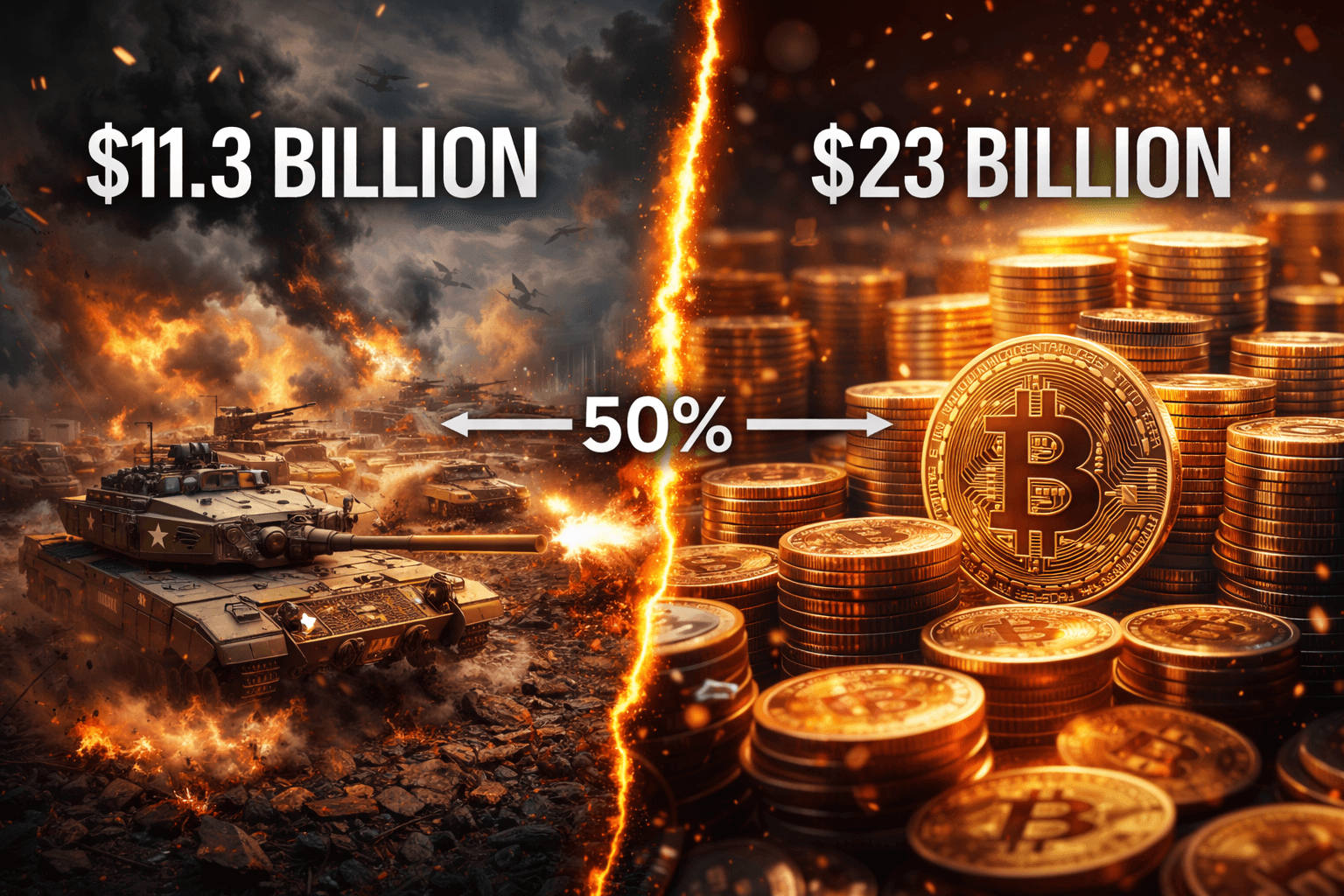
Iran War Spending Equals Half the Value of the U.S. Bitcoin Reserve in Just Six Days
1 min read · 14 Mar 2026

Prosecutors Push to Retry Tornado Cash Co-Founder Even as Washington Softens on Crypto Privacy
1 min read · 12 Mar 2026

Forget CPI and ETFs Oil Prices May Now Be the Biggest Signal for Bitcoin
1 min read · 8 Mar 2026

How SK Telecom Is Rebuilding Itself Around AI at MWC 2026
1 min read · 3 Mar 2026

Dubai and the UAE on the Frontlines: How the Iran Israel Conflict Has Reverberated Across a Global Hub
1 min read · 3 Mar 2026

US and Israel Military Strikes on Iran and the Escalation of Conflict in the Middle East
1 min read · 28 Feb 2026