

How Blockchain Based Government Debt Is Quietly Reshaping Global Finance For decades government treasury instruments have been one of the most conservative and trusted components of global finance. They were designed to move slowly offer stability and serve as the backbone of banking systems investment portfolios and monetary policy. That perception is now changing rapidly. […]
For decades government treasury instruments have been one of the most conservative and trusted components of global finance. They were designed to move slowly offer stability and serve as the backbone of banking systems investment portfolios and monetary policy. That perception is now changing rapidly. Over the past year tokenized treasuries have experienced explosive growth transforming from a niche experiment into one of the fastest growing sectors in digital finance. This shift is not simply about putting old assets on new technology. It represents a fundamental change in how money can move settle and interact with software in real time.
Tokenized treasuries are digital representations of government debt issued or mirrored on blockchain networks. These tokens are backed by real world treasury instruments and can be held transferred and settled instantly. What makes this innovation especially powerful is not just speed but programmability. For the first time highly trusted low risk assets can interact directly with smart contracts automated systems and decentralized financial infrastructure without intermediaries.
In recent months the value of tokenized treasury products has grown dramatically increasing by more than one hundred percent in a short period of time. This growth signals strong demand from institutions funds and financial platforms seeking stable yield with modern liquidity features. Unlike traditional treasury markets which rely on layered settlement systems banking hours and multiple intermediaries tokenized treasuries operate continuously. They can be transferred at any time settled instantly and integrated into automated financial workflows.
This has given rise to what many describe as a programmable cash loop. In this system tokenized treasuries act as both a store of value and an active financial component. They can be used as collateral earn yield settle obligations and automatically rotate between strategies without human intervention. Smart contracts can direct funds to move based on predefined rules such as interest rate changes liquidity needs or market conditions. The result is a financial system that operates with precision speed and transparency that traditional infrastructure struggles to match.
One of the most important aspects of this shift is trust. Government treasuries are widely considered among the safest financial instruments available. When these assets are tokenized they bring that trust into the digital asset ecosystem. This has helped bridge the gap between traditional finance and blockchain based systems. Institutions that were hesitant to engage with volatile digital assets are now participating through tokenized treasuries because they combine familiar risk profiles with new technological advantages.
Banks are paying close attention. Traditional banking systems were built around delayed settlement manual reconciliation and centralized control. Tokenized treasuries expose inefficiencies in that model. When a digital asset can settle instantly earn yield automatically and integrate with software driven finance it challenges the value proposition of legacy systems. Banks now find themselves under pressure to replicate these features or risk losing relevance in key financial workflows.
The scramble to respond has already begun. Financial institutions are exploring internal tokenization initiatives private blockchain systems and partnerships with technology providers. However replicating the full benefits of open programmable systems is not simple. Many banks are constrained by regulation legacy infrastructure and risk management frameworks designed for a different era. Meanwhile blockchain based treasury platforms continue to evolve rapidly driven by open competition and global participation.
Another important driver of adoption is efficiency. In traditional markets treasury instruments often sit idle between settlement cycles. With tokenization these assets remain productive at all times. They can be automatically deployed into liquidity pools used for short term financing or integrated into treasury management systems that optimize yield continuously. This efficiency is particularly attractive in a global environment where capital optimization and risk management are increasingly important.
Transparency is also a major advantage. Blockchain based systems allow real time visibility into asset flows balances and settlement activity. This reduces counterparty risk and simplifies auditing and compliance processes. While traditional systems rely on periodic reporting and reconciliation tokenized treasuries offer continuous verification. This feature is especially appealing to institutions managing large pools of capital across multiple jurisdictions.
Despite the momentum challenges remain. Regulatory clarity varies by region and not all jurisdictions treat tokenized financial instruments the same way. Custody standards legal frameworks and operational risk models are still evolving. There is also the question of interoperability between different blockchain networks and traditional systems. For tokenized treasuries to reach their full potential they must integrate seamlessly with existing financial infrastructure while preserving the advantages of decentralization and automation.
There is also a cultural shift underway. Traditional finance has long relied on centralized control and manual oversight. Programmable cash systems require trust in code automated logic and distributed validation. This shift demands new skills new governance models and new approaches to risk. Institutions that adapt quickly may gain significant advantages while those that resist may find themselves increasingly outpaced.
What is becoming clear is that tokenized treasuries are not a passing trend. They represent a convergence of trust yield and technology that aligns with broader changes in how financial systems operate. As digital infrastructure becomes more capable and more widely adopted the demand for assets that can function natively within that infrastructure will continue to grow.
The rise of programmable treasury based cash loops also raises deeper questions about the future of money. When cash itself becomes software driven capable of responding automatically to conditions and policies the line between monetary instruments and financial applications begins to blur. This creates opportunities for innovation but also demands careful consideration of governance stability and systemic risk.
In the near term tokenized treasuries are likely to expand further as institutions seek safe yield efficient settlement and operational flexibility. In the longer term they may help redefine the role of banks custodians and even central financial authorities. The systems being built today are laying the foundation for a more automated transparent and interconnected financial world.
The rapid growth of this sector shows that markets are ready for change. Programmable cash backed by trusted assets offers a compelling alternative to slow opaque legacy systems. As traditional banks work to catch up the momentum continues to build in favor of open digital finance models that operate continuously and globally.
Tokenized treasuries may not replace traditional finance overnight but they are already reshaping expectations. In doing so they highlight a broader truth. When trusted assets meet programmable infrastructure the result is not just efficiency but a transformation in how value moves through the world.
-1-300x200.png&w=3840&q=75)
Visa is quietly moving stablecoins into the back office of money
1 min read · 30 Apr 2026
-300x200.png&w=3840&q=75)
Europe’s mythos problem is really a security problem
1 min read · 21 Apr 2026
-300x200.png&w=3840&q=75)
SpaceX’s Cursor move is not just about buying a startup
1 min read · 21 Apr 2026

YouTube’s Creator Future Is Starting to Look Less Like Hollywood and More Like a High End Home Studio Economy
1 min read · 29 Mar 2026
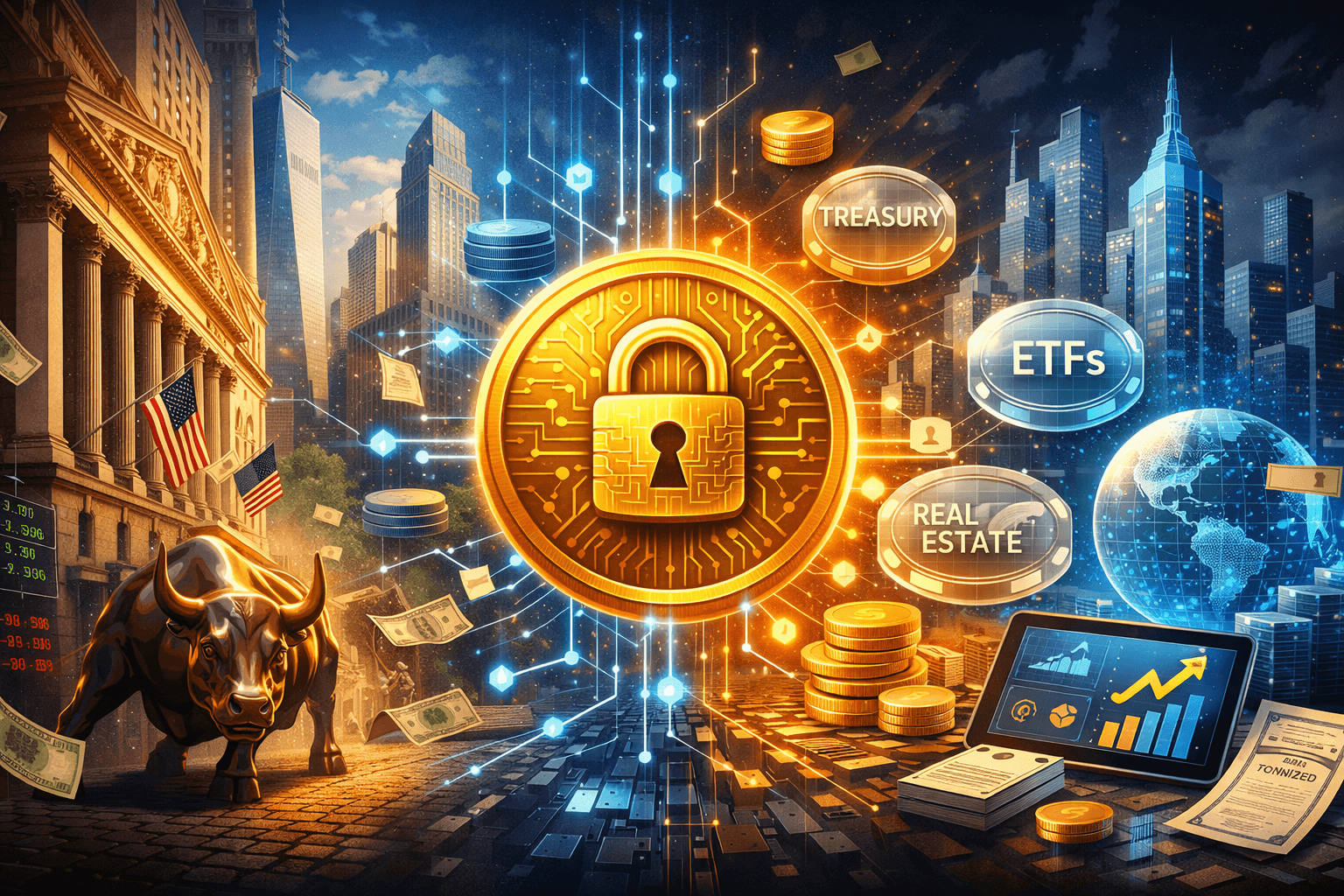
Wall Street’s Tokenization Rush Is Not a Crypto Victory, It Is a Rewrite of Finance Designed to Keep the Old Gatekeepers in Charge
1 min read · 29 Mar 2026

India’s Semaglutide Shock Could Redraw the Global Weight Loss Drug Market
1 min read · 28 Mar 2026

Milady, Loyalty, and Ethereum’s Identity Fight Are Exposing a Much Deeper Cultural Split
1 min read · 28 Mar 2026
David Sacks Leaves the White House With a Crypto Record That Helped Banks More Than Bitcoin
1 min read · 28 Mar 2026
XRP ETFs Just Flipped. And That Shift Might Matter More Than The Rally
1 min read · 27 Mar 2026
One Nation’s New Surge Looks Bigger Than a Protest Spike Because the Structural Cracks in Australian Politics Are Getting Harder to Ignore
1 min read · 27 Mar 2026