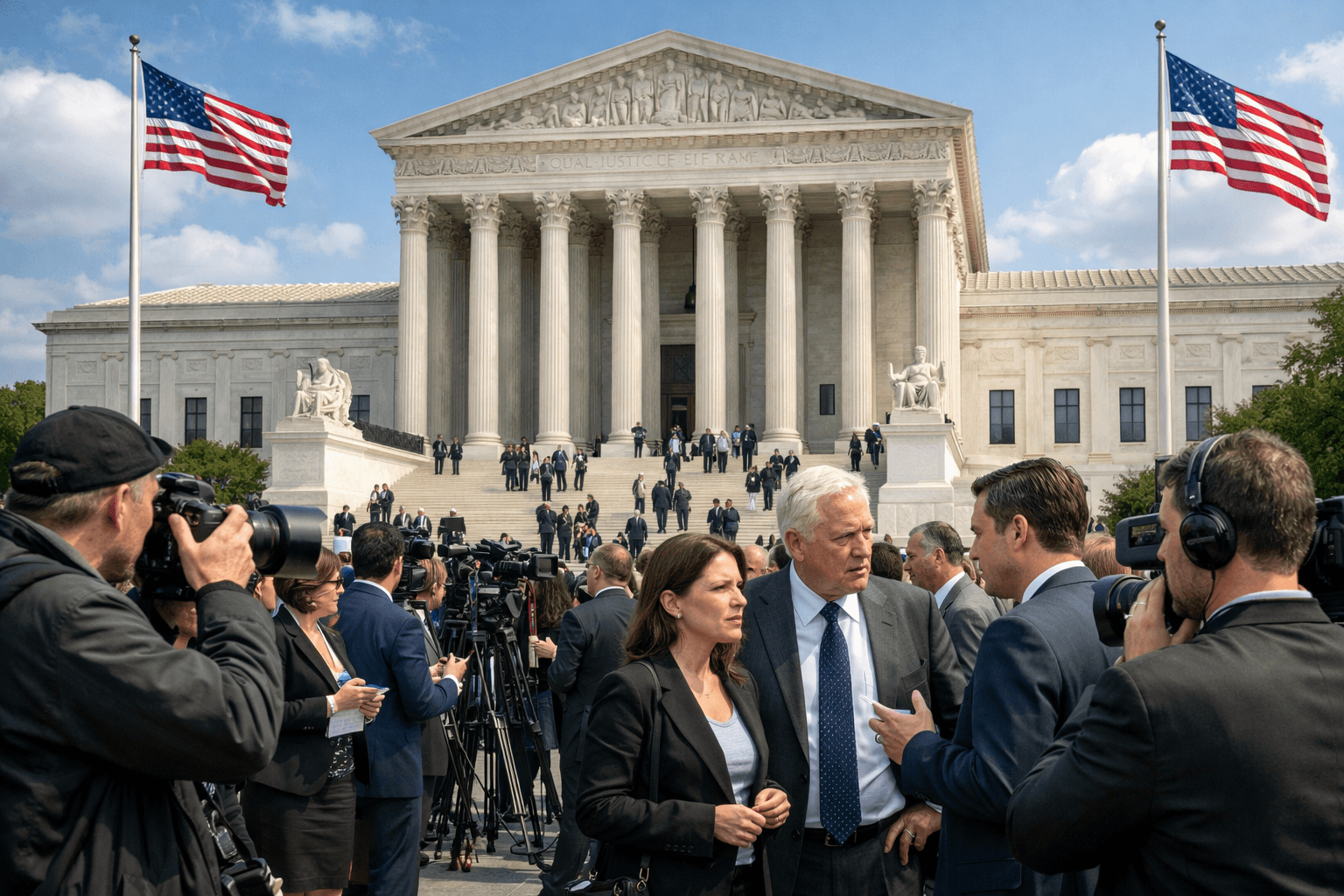

A landmark ruling reshapes the limits of executive authority and global trade norms In a watershed moment for American constitutional law and global trade policy, the United States Supreme Court has delivered a major blow to President Donald Trump’s sweeping tariff regime, ruling that his use of emergency powers to impose tariffs was unlawful. The […]
In a watershed moment for American constitutional law and global trade policy, the United States Supreme Court has delivered a major blow to President Donald Trump’s sweeping tariff regime, ruling that his use of emergency powers to impose tariffs was unlawful. The 6–3 decision reflects longstanding constitutional principles regarding the separation of powers and carries significant implications for international commerce, business planning, and U.S. economic strategy.
At the center of the dispute was a fundamental legal question: can a U.S. president unilaterally impose broad tariffs under emergency authority without specific approval from Congress?
President Trump’s administration relied on the International Emergency Economic Powers Act, known as IEEPA. This law allows presidents to regulate certain aspects of international commerce during a declared national emergency involving foreign threats. Using this authority, the administration imposed wide ranging tariffs on imports from numerous countries.
The Supreme Court majority concluded that IEEPA does not grant the executive branch the power to impose sweeping import taxes. The Constitution assigns the power to levy taxes and regulate trade primarily to Congress. The Court determined that broad tariff authority requires clear and explicit legislative approval.
In its reasoning, the Court relied in part on what is commonly known as the major questions doctrine. This legal principle holds that executive actions with vast economic and political consequences must be supported by clear authorization from Congress. Chief Justice John Roberts, writing for the majority, stated that imposing tariffs, which function as a form of taxation, requires very clear congressional authority and cannot be justified through broad interpretation of emergency statutes.
Justices Neil Gorsuch and Amy Coney Barrett joined the majority along with the Court’s liberal justices. The cross ideological alignment reflected shared concerns about the scope of executive authority rather than partisan considerations.
Although the decision limits one of the administration’s primary trade tools, it does not eliminate uncertainty in global markets. Businesses, investors, and trading partners continue to assess how U.S. trade policy may evolve under existing statutory frameworks.
Legal experts note that other trade laws remain available to the president. These include provisions within the Trade Act of 1974 and national security based trade statutes that permit more targeted tariffs under defined conditions. While narrower in scope, these mechanisms still provide tools for trade enforcement and economic protection.
Shortly after the ruling, President Trump’s administration indicated it would explore alternative statutory authorities, including Section 122 of the Trade Act, which allows temporary tariffs in response to balance of payments concerns. This response suggests that while the legal foundation has shifted, the broader trade strategy may continue in revised form.
For companies that have already paid tariffs under the now invalidated authority, the ruling introduces new financial and legal questions. Estimates suggest that tariff collections potentially affected by the decision could total more than 175 billion dollars. However, the process for determining eligibility for refunds, if any, remains uncertain and may be addressed in lower courts over time.
Industries that depend heavily on imports, including manufacturing, retail, automotive, and consumer goods sectors, face planning challenges. Pricing structures, supply chain contracts, and long term investment strategies may require adjustment as the regulatory landscape becomes clearer.
The Supreme Court’s decision reinforces constitutional boundaries between the legislative and executive branches. By affirming that broad tariff authority lies with Congress, the Court underscored the principle that taxation and trade regulation are legislative responsibilities unless clearly delegated.
The ruling does not prevent future presidents from using emergency authorities where explicitly permitted. Rather, it clarifies that expansive economic actions require direct congressional backing. This interpretation may influence future administrations of either political party when considering the use of emergency economic powers.
Internationally, trading partners are closely monitoring developments. The United States plays a central role in global trade flows, and significant policy shifts can affect commodity markets, currency stability, and supply chains worldwide.
While the decision restricts one legal avenue for imposing tariffs, it does not necessarily signal a broad shift in U.S. trade policy. Trade negotiations, strategic tariffs, and enforcement measures may continue under other statutes. As a result, global markets may experience a period of recalibration rather than immediate stability.
Additional litigation is expected as businesses and trade groups seek clarity on financial implications. Lower federal courts may be tasked with determining whether tariff collections made under IEEPA authority must be refunded and how any such process would operate.
Congress may also respond legislatively. Lawmakers could consider clarifying the scope of presidential trade authority or establishing more structured oversight mechanisms for future tariff actions. Proposals similar to previously discussed trade review frameworks may re emerge in response to the Court’s ruling.
From a policy perspective, the decision invites renewed debate over how trade power should be balanced between the executive branch and Congress. Some argue that flexibility is necessary in a rapidly changing global economy. Others emphasize the importance of preserving constitutional limits.
The Supreme Court’s decision marks a significant constitutional development during President Trump’s current term. It represents judicial review of executive authority rather than a broader judgment on trade policy objectives.
For businesses and global markets, the primary concern remains predictability. Companies must assess evolving trade rules while maintaining operational resilience. Investors and trading partners will continue monitoring both judicial developments and administrative responses.
Ultimately, the ruling clarifies the legal boundaries surrounding emergency tariff authority while leaving open broader questions about the future direction of U.S. trade policy. As litigation proceeds and policymakers consider next steps, the global economic community will be watching closely.
The intersection of constitutional law, executive power, and international trade ensures that this issue will remain central to economic and political discussions in the months ahead
-1-300x200.png&w=3840&q=75)
Visa is quietly moving stablecoins into the back office of money
1 min read · 30 Apr 2026
-300x200.png&w=3840&q=75)
Europe’s mythos problem is really a security problem
1 min read · 21 Apr 2026
-300x200.png&w=3840&q=75)
SpaceX’s Cursor move is not just about buying a startup
1 min read · 21 Apr 2026

YouTube’s Creator Future Is Starting to Look Less Like Hollywood and More Like a High End Home Studio Economy
1 min read · 29 Mar 2026

Wall Street’s Tokenization Rush Is Not a Crypto Victory, It Is a Rewrite of Finance Designed to Keep the Old Gatekeepers in Charge
1 min read · 29 Mar 2026

India’s Semaglutide Shock Could Redraw the Global Weight Loss Drug Market
1 min read · 28 Mar 2026

Milady, Loyalty, and Ethereum’s Identity Fight Are Exposing a Much Deeper Cultural Split
1 min read · 28 Mar 2026

David Sacks Leaves the White House With a Crypto Record That Helped Banks More Than Bitcoin
1 min read · 28 Mar 2026

XRP ETFs Just Flipped. And That Shift Might Matter More Than The Rally
1 min read · 27 Mar 2026
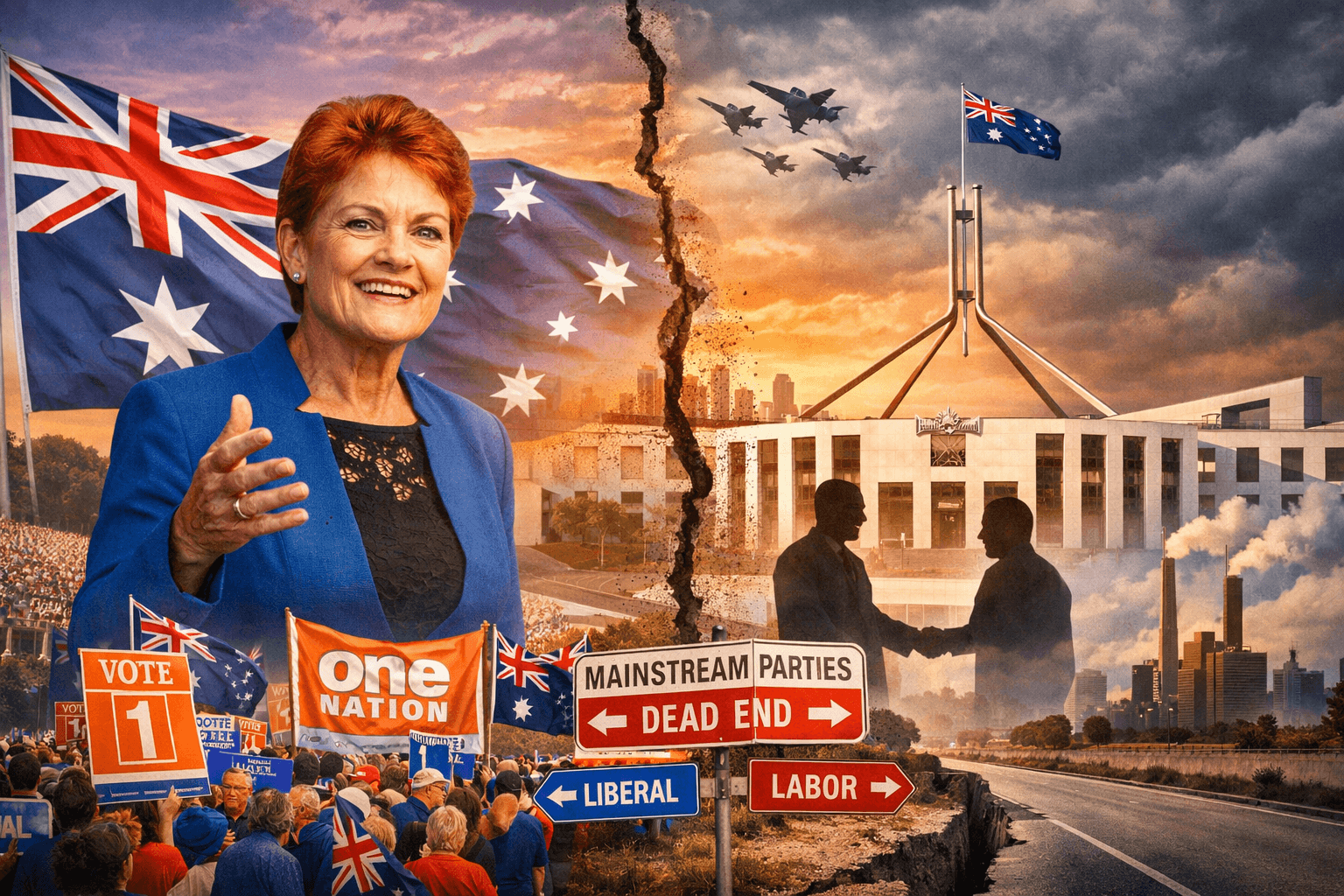
One Nation’s New Surge Looks Bigger Than a Protest Spike Because the Structural Cracks in Australian Politics Are Getting Harder to Ignore
1 min read · 27 Mar 2026