The line that cuts through the hype
Every now and then a line comes along that says more in one sentence than a thousand product demos ever could. “If you care about safety: What can this AI get wrong, and how would I check it?” is one of those lines. Whether it came from a polished campaign, a product message, or a sharp piece of copy, it points straight at the real issue. The problem with AI is not that it can sound clumsy. The problem is that it can sound polished, useful, and utterly certain while still being wrong. OpenAI’s own help guidance says ChatGPT can be helpful but is not always right, and that it can produce incorrect or misleading outputs that sound confident even when they are wrong. Its family guide makes the same point more plainly, warning that AI can misunderstand sources, mix details from different places, misquote, or fill in gaps with something that merely sounds plausible.
That is why this question matters so much. It drags the conversation away from magic tricks and back toward responsibility. The last few years have trained people to ask AI for speed, convenience, summaries, answers, and confidence. Much fewer people have been trained to ask for limits, uncertainty, or proof. Yet those are exactly the questions that decide whether AI is a useful assistant or a polished bullshitter. OpenAI’s 2025 research on hallucinations argues that this problem is not some strange bug sitting off to the side. It says language models often hallucinate because the systems used to train and evaluate them can reward guessing over admitting uncertainty. In other words, the pressure to answer can be stronger than the pressure to be right.
What ai gets wrong
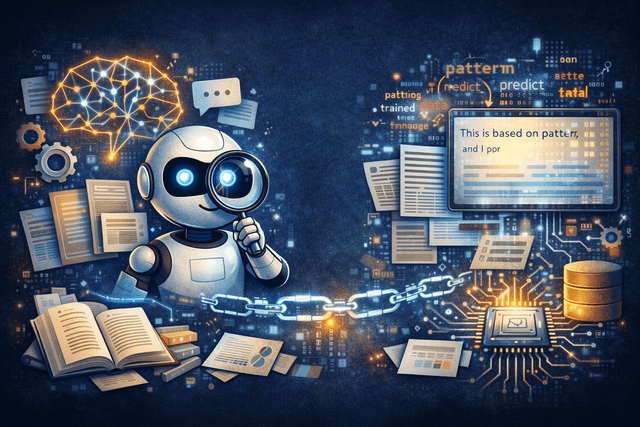
The simplest way to understand the risk is to stop thinking of AI as a truth machine. It is better understood as a pattern machine that can sometimes land on the truth and sometimes land beside it while sounding just as smooth. OpenAI says hallucinations can show up as incorrect facts, dates, definitions, quotes, summaries, or references. It also says the model may invent supporting material, including citations or named sources that do not actually back the claim being made. That matters because a wrong answer without sources is one problem, but a wrong answer wearing the costume of evidence is a much bigger one.
This is where many ordinary users get caught out. If a chatbot gives an answer in clean paragraphs, adds a neat explanation, and drops in a few references, it feels checked even when it is not. OpenAI’s own family guide warns that even when a model provides sources, it can still misread them, merge facts from different places, or misquote them. NIST’s generative AI guidance says fact-checking and verification should be deployed and documented, especially when information is drawn from multiple or unknown sources. That is a sober reminder that the presence of a source is not the same thing as the presence of truth. The source still has to be relevant, interpreted correctly, and actually support the claim being made.


-1.png&w=3840&q=75)
-1-640x427.png&w=3840&q=75)
-1-300x200.png&w=3840&q=75)
-300x200.png&w=3840&q=75)
-300x200.png&w=3840&q=75)
-300x200.png&w=3840&q=75)
-300x200.png&w=3840&q=75)
-1-300x200.png&w=3840&q=75)

-1-300x200.png&w=3840&q=75)
-300x200.png&w=3840&q=75)