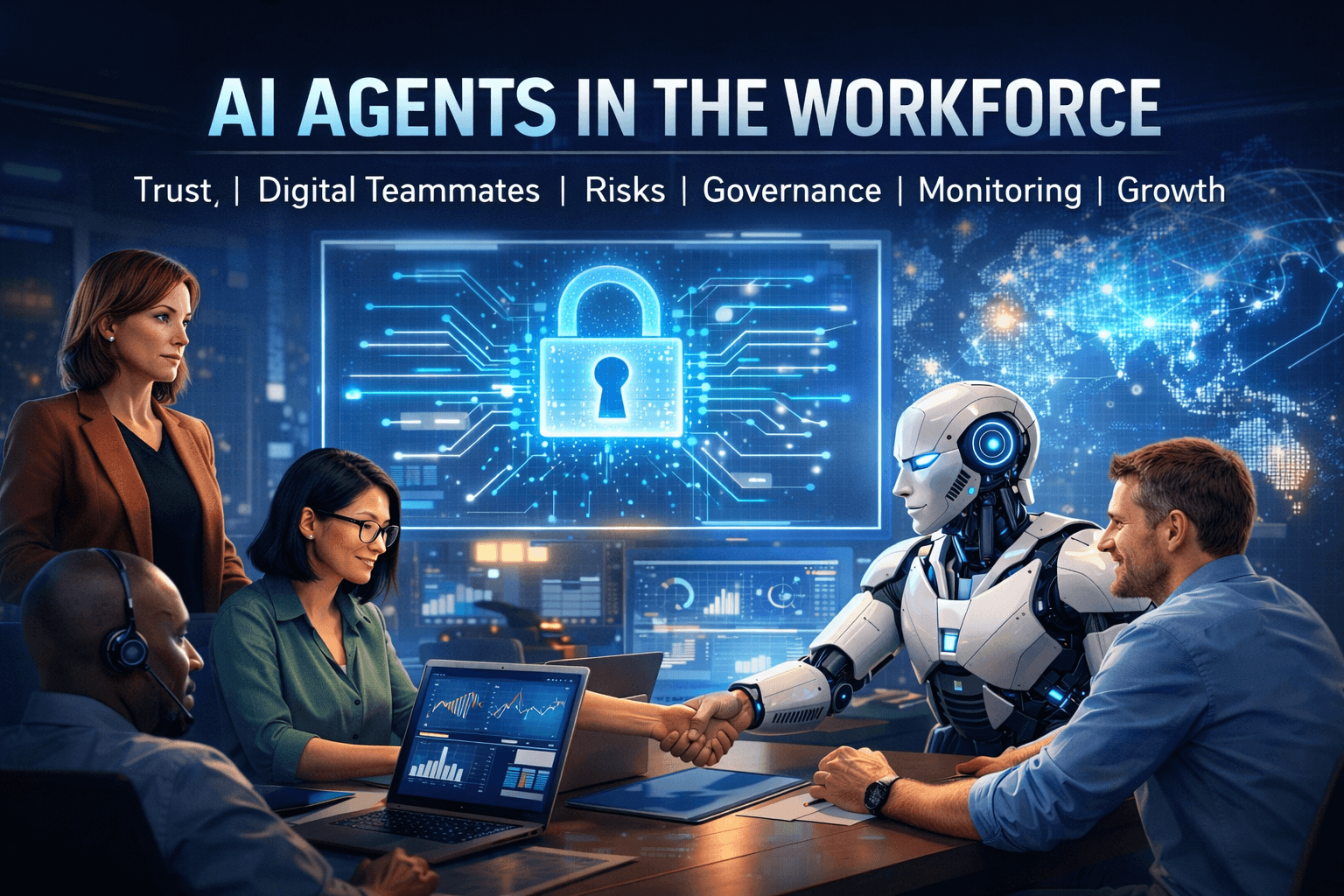

exploring how AI agents are entering the workforce as digital teammates, and why trust, security, and governance will be essential to ensure they operate safely and responsibly at scale.
AI agents are moving fast. They are no longer just tools that answer questions or generate content. They are starting to take action, automate workflows, and operate inside real business environments. As this shift grows, one thing becomes clear. If AI is going to work alongside people, it needs to be treated like part of the team. That means clear rules, accountability, and strong safeguards from the start.
Microsoft is pushing this idea forward. The company believes AI agents will take on real roles inside organisations, but only if they are built on trust and security. AI is becoming part of the workforce. Agents can already summarise meetings, analyse data, write code, and trigger actions across systems. The next step is simple. They will connect tasks, work across platforms, and make decisions within set limits. At that point, they are no longer passive. They become active contributors.
If an AI agent is making decisions or taking action, organisations need to understand what it is doing and why.
They need to know what data it can access, what actions it can take, and how its decisions are tracked. Without that visibility, AI quickly becomes a risk instead of an advantage. Trust in AI is not optional. It is operational.
The more capable AI becomes, the more subtle the risks get. Small mistakes can scale quickly. A wrong decision or incorrect data can flow through systems and create bigger problems. Teams may also begin to trust AI too much, relying on outputs without checking them. This creates a new kind of blind spot where speed replaces careful thinking.
This is where governance becomes critical. Organisations need systems that set clear boundaries for AI. This includes permissions, approval steps, monitoring, and audit trails. AI should be managed like a new team member, with rules and oversight. But the difference is speed. AI operates faster, so the controls need to be stronger.
AI cannot be checked occasionally. It needs continuous oversight. Organisations must track behaviour in real time, understand patterns, and detect problems early. Security also becomes more important because AI agents create new ways for systems to interact. This is where AI becomes both powerful and risky at the same time.
Companies want speed. AI delivers that. But speed without control creates risk. Moving too slowly also creates problems. The solution is balance. AI should move fast, but within clear boundaries. It should support human decisions, not replace oversight.
This is not about slowing AI down.Safeguards actually make AI more useful. Without trust, adoption slows. Without governance, systems become unstable. Guardrails are what allow AI to scale properly inside organisations.
The future of work is not human versus AI. It is human plus AI. AI will handle repetitive and data-heavy tasks. Humans will focus on strategy, creativity, and decision-making. The value comes from how these two work together.
This is the next phase of AI.The question is no longer what AI can do. It is how safely and reliably it can do it.The companies that understand this early will build systems people trust. And in the long run, trust is what turns powerful technology into something truly valuable.
-2-300x200.png&w=3840&q=75)
AI’s Last Mile Is Not Better Models, It Is Cheaper Workflows
1 min read · 12 May 2026
-3-300x200.png&w=3840&q=75)
OpenAI’s cybersecurity push shows crypto why waiting for the hack is no longer enough
1 min read · 12 May 2026

Wispr Flow’s India bet shows voice AI is moving beyond English-first tech
1 min read · 9 May 2026
-300x200.png&w=3840&q=75)
The front desk is becoming software, and AI is taking the first call
1 min read · 8 May 2026
-300x200.png&w=3840&q=75)
GPT-5.5 Instant shows the next AI race is about trust at everyday speed
1 min read · 6 May 2026
-2-300x200.png&w=3840&q=75)
FOMO Tools And FOMO Academy Show Why Builders Need Evidence Before Speed
1 min read · 3 May 2026

China’s AI Layoff Ruling Shows The Next Big Fight Is Not Automation, But Who Pays For It
1 min read · 3 May 2026
-2-300x200.png&w=3840&q=75)
CX AI Is Moving From Chatbot Hype To Data Discipline
1 min read · 2 May 2026
-2-300x200.png&w=3840&q=75)
AI Will Not Kill Low-Code Because The Real Fight Is Software Control
1 min read · 2 May 2026

AI Agents Are About To Get A CFO
1 min read · 1 May 2026