

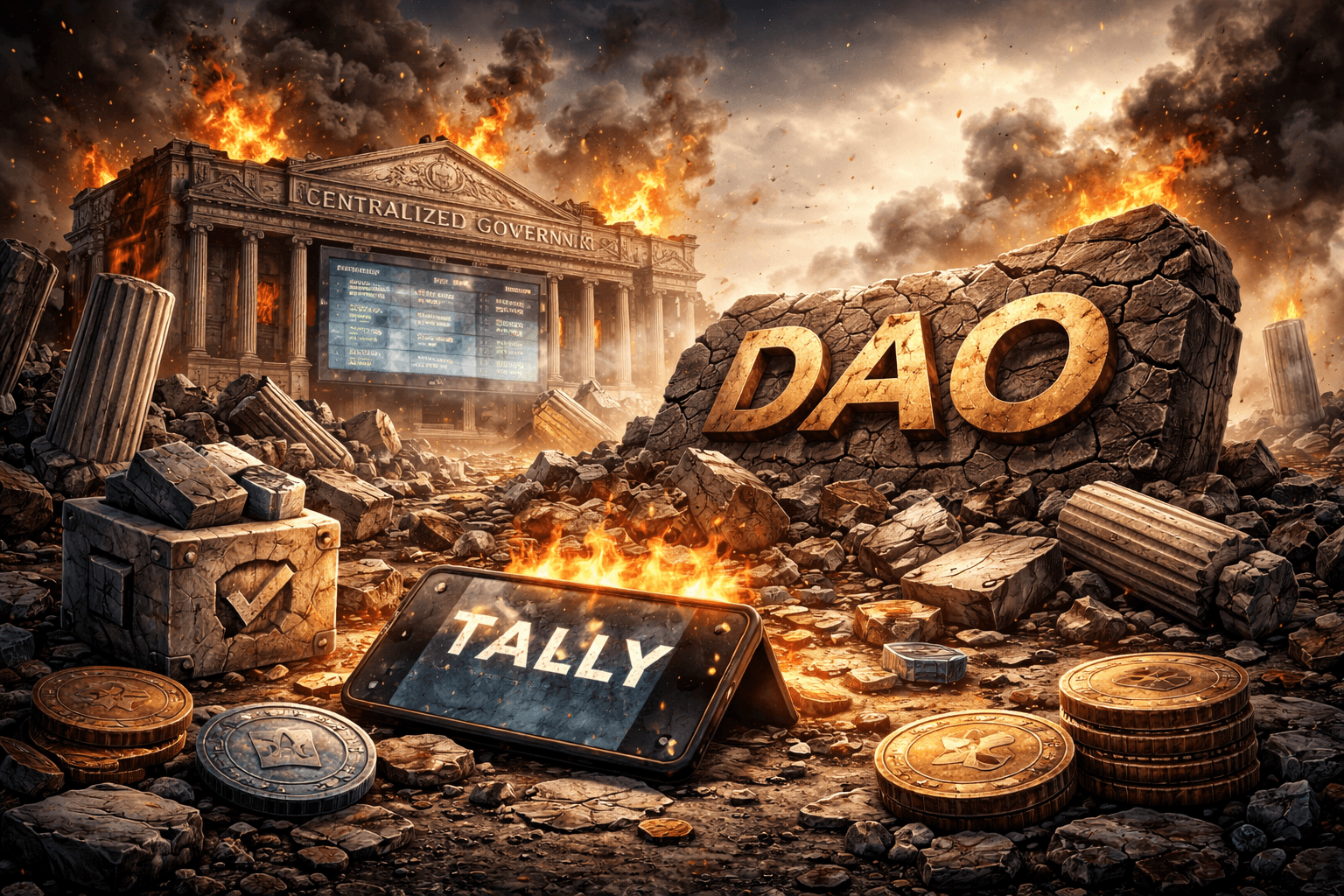
Tally helped power on-chain governance for hundreds of crypto projects, processed more than $1 billion in payments, and still could not make the model work. For years, the DAO story was one of crypto’s boldest promises. The pitch sounded powerful: communities would govern protocols on-chain, token holders would vote on major decisions, and decentralized coordination […]
The pitch sounded powerful: communities would govern protocols on-chain, token holders would vote on major decisions, and decentralized coordination would replace the old company structure. In theory, this was supposed to be one of blockchain’s biggest breakthroughs.
Tally, a governance infrastructure platform used by more than 500 DAOs including major names like Uniswap, ENS and Arbitrum, is winding down operations after more than five years in the market. Reports say the company is also scrapping plans for a token sale after concluding that demand for governance tooling was not strong enough to support a sustainable business.
In April 2025, the company announced an $8 million Series A round backed by investors including AppWorks, Blockchain Capital, 1kx, CyberFund, Placeholder, BitGo and Bloccelerate. At the time, Tally positioned itself as core infrastructure for the on-chain economy and said it wanted to help protocol tokens capture more value.
By the end of 2025, Tally was highlighting governance activity across large ecosystems, including Wormhole, and presenting itself as central infrastructure for proposal systems, delegation and token-holder participation. But the gap between activity on-chain and a viable business turned out to be wider than the narrative suggested.
Multiple reports say Tally served more than 1 million users, supported hundreds of organizations, and processed over $1 billion in payments during its run. Some reporting also says the protocol treasuries and systems connected to its infrastructure covered tens of billions of dollars in value. Yet even with that footprint, the company still concluded there were effectively not enough paying users for governance tooling to stand on its own.
Crypto often points to governance participation, token-holder votes and treasury management as proof that DAOs are a durable organizational model. But Tally’s collapse suggests that activity is not the same thing as product-market fit. A system can process a lot of proposals, votes and treasury actions without creating a strong enough market for the companies building the tools underneath it.
That is not the same as saying governance disappears. Big protocols will still vote. Delegates will still matter. Treasury decisions will still be made. But the dream that DAO infrastructure would become a massive standalone category now looks much weaker than it did during the peak cycle, when decentralization was treated as both an ideology and a business model.
Tally’s shutdown comes as crypto continues trying to present itself as entering a more mature phase, with better regulation, more institutional capital and renewed optimism around real-world adoption. But one of the clearer lessons from this episode is that not every part of the old crypto thesis survives that transition. In fact, more favorable regulation may reduce the urgency around some decentralization tools if teams no longer feel the same pressure to push governance outward. One report on the shutdown said demand for heavy decentralization had weakened as the regulatory climate shifted.
When crypto felt politically threatened, DAOs looked essential. When the market matures and compliance becomes more accepted, the appetite for messy token-holder governance may shrink. The industry still likes the language of decentralization, but businesses and users often prefer speed, clarity and execution over endless governance mechanics.
Tally’s shutdown is a stress test for one of crypto’s foundational ideas. If a well-funded platform with major protocol integrations, real usage and years of market presence still cannot build a durable business around DAO tooling, then the sector may need to confront an uncomfortable possibility: the DAO dream was not fake, but it may have been far smaller than believers imagined.
But it may be headed for something less romantic, less open, and a lot more selective than the movement once promised.
The CLARITY Act fight is really about who controls the next layer of digital money
1 min read · 13 May 2026
-2-300x200.png&w=3840&q=75)
-300x200.png&w=3840&q=75)
-300x200.png&w=3840&q=75)
-2-300x200.png&w=3840&q=75)
-300x200.png&w=3840&q=75)

-300x200.png&w=3840&q=75)
-2-300x200.png&w=3840&q=75)
-2-300x200.png&w=3840&q=75)
-300x200.png&w=3840&q=75)