-1-640x427.png&w=3840&q=75)
26 Apr 2026 · 1 min read
AI is making crypto scams more convincing by improving fake images, deepfakes, social profiles, and phishing campaigns. The next phase of crypto safety will depend on verification, not appearances.
NVIDIA OpenShell is designed to make autonomous AI agents safer by running them inside controlled, policy-enforced environments. It shows that the future of AI will depend not only on smarter models, but on secure systems that can govern what agents are allowed to do.
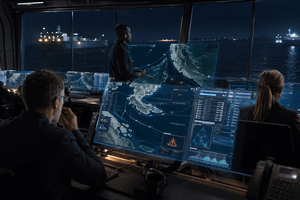
For a long time, AI felt like a clever assistant sitting in a box. You asked it a question, it gave you an answer, and that was mostly the end of it. But autonomous AI agents are different. They can read files, use tools, run code, connect to workflows, and keep working across systems. NVIDIA says this is a major shift because these agents are no longer only generating responses; they are taking action inside real environments.
The problem is not that agents are becoming useful. The problem is that useful agents need access. They may need files, apps, credentials, code, databases, APIs, networks, and business tools. That creates a new risk. A chatbot that gives a bad answer is one thing. An agent with tool access making the wrong move is another thing entirely. NVIDIA’s technical blog puts it plainly: long-running agents with shell access, credentials, and internal APIs create a very different security problem.
The old way of handling AI safety often relied on instructions inside the model or application. That helps, but it is not enough when the agent can act on its own. If the safety rules live inside the same system that is being pushed, tricked, or compromised, then the guardrail can become part of the problem. What this really means is simple. You do not want the agent policing itself. You want the environment around it to control what it can and cannot do.
NVIDIA OpenShell is an open source runtime built to run autonomous agents inside controlled environments. It is part of the NVIDIA Agent Toolkit and is designed to separate agent behaviour from policy enforcement. Instead of hoping the agent follows instructions, OpenShell applies rules at the infrastructure level, outside the agent’s reach. NVIDIA describes this as a sandbox model where each agent session is isolated and permissions are checked before actions happen.
The easiest way to understand OpenShell is to think of browser tabs. One website should not be able to freely reach into another website’s private data. One tab should be isolated from the next. NVIDIA is applying that kind of thinking to AI agents. Each agent runs in a controlled space. Resources are limited. Permissions are checked. Policies are enforced by the runtime, not by the agent’s own promises. That matters because the more powerful agents become, the more important isolation becomes.
This is where things change. OpenShell is built around out-of-process policy enforcement. That means the important controls sit outside the agent. Even if the agent is compromised, confused, or manipulated, it should not be able to simply override the rules. NVIDIA says OpenShell can govern what the agent can see, what it can do, and where inference goes. It also includes sandboxing, policy controls, and a privacy router to manage sensitive data handling.

Latest
The latest industry news, interviews, technologies, and resources.
-1-640x427.png&w=3840&q=75)
26 Apr 2026 · 1 min read
AI is making crypto scams more convincing by improving fake images, deepfakes, social profiles, and phishing campaigns. The next phase of crypto safety will depend on verification, not appearances.
-640x427.png&w=3840&q=75)
26 Apr 2026 · 1 min read
Businesses will not adopt autonomous agents widely unless they can trust them. A company cannot allow an agent to wander through internal systems with loose permissions and no audit trail. It needs rules. It needs oversight. It needs proof. OpenShell is aimed at that exact problem by giving organisations a unified policy layer for agents, whether they are coding assistants, research tools, or long-running workflow agents. NVIDIA also says OpenShell is being developed with security partners including Cisco, CrowdStrike, Google Cloud, Microsoft Security, and Trend Micro.
This is not only for large companies. NVIDIA also links OpenShell with NemoClaw, an open source reference stack for building always-on personal AI agents. These agents can run in the cloud, on premises, or on personal computers with NVIDIA RTX hardware. The bigger idea is that people may want personal agents that can keep learning and working over time, but they will still need privacy controls and security boundaries.
The next stage of AI is not just about smarter models. It is about safer deployment. If agents are going to work inside businesses, homes, devices, and personal computers, they need proper runtime security. They need sandboxes. They need permissions. They need audit trails. They need privacy routing. The winners in this space may not be the companies with the flashiest chatbot. They may be the companies that make agents safe enough to trust.
NVIDIA OpenShell is a sign of where AI is heading. The conversation is moving from “what can the model say?” to “what can the agent safely do?” That is a much bigger question. Autonomous agents may become one of the most powerful shifts in computing, but only if they are controlled properly. OpenShell is NVIDIA’s answer to that problem: put the safety around the agent, not just inside it.
-1-300x200.png&w=3840&q=75)
AI crypto scams are reaching breaking point
1 min read · 26 Apr 2026
-300x200.png&w=3840&q=75)
Build With AI And Community
1 min read · 25 Apr 2026
-1-300x200.png&w=3840&q=75)
Meta’s Loss Is Thinking Machines’ Gain
1 min read · 25 Apr 2026
-1-300x200.png&w=3840&q=75)
AI agents need more than clever brains now
1 min read · 25 Apr 2026
-300x200.png&w=3840&q=75)
GPT-5.5 makes ChatGPT look less like a chatbot and more like a future super app
1 min read · 24 Apr 2026
-300x200.png&w=3840&q=75)
Nvidia and Google are turning inference cost into the next big ai battleground
1 min read · 23 Apr 2026

The Strait of Hormuz crypto scam is really a story about panic for sale
1 min read · 22 Apr 2026
-300x200.png&w=3840&q=75)
Europe’s mythos problem is really a security problem
1 min read · 21 Apr 2026
-1-300x200.png&w=3840&q=75)
India’s deepfake push is becoming a real test of how ai gets governed
1 min read · 21 Apr 2026

AI fundamentals. and how ai works
1 min read · 21 Apr 2026
DoorDash’s move toward stablecoin-powered payouts shows how crypto may shift from speculation into real business infrastructure. The real story is faster money movement for workers, merchants, and global platforms.