
Bitcoin crash wipes $2B as price hits 81k Bitcoin reminded everyone how unforgiving the market can be after crashing from the mid-$80,000 range to around $81,000 in a violent overnight move that erased more than $2 billion in leveraged positions. Traders who had been comfortably riding the bullish wave suddenly watched their long positions implode […]
Bitcoin reminded everyone how unforgiving the market can be after crashing from the mid-$80,000 range to around $81,000 in a violent overnight move that erased more than $2 billion in leveraged positions. Traders who had been comfortably riding the bullish wave suddenly watched their long positions implode as the market sliced through support levels that many believed were untouchable. That sudden drop wasn’t just another red candle; it was a complete liquidation cascade that exposed how fragile the setup had become. When too many people lean the same direction, the market tends to step in and force a reset, and that’s exactly what happened as Bitcoin lost the $85k level that had been propping up sentiment for days.
The move was particularly brutal because of how crowded the long side had become. Everyone felt safe betting that dips would get bought instantly, a mindset that usually works until it doesn’t. Funding rates had been elevated, open interest had ballooned, and traders kept piling more leverage onto the assumption that Bitcoin was gearing up for a clean march toward $90k and beyond. But when the price slipped a little lower than expected, liquidation engines across exchanges started firing off like a chain reaction. Each forced sell pushed price further down, triggering more liquidations stacked right below. That’s why the move felt so sudden and sharp; it wasn’t a normal sell-off but a mechanical avalanche created by too much borrowed money resting on too little support.
This kind of market flush always looks catastrophic in the moment, but it actually serves a purpose. The crash wiped out a ton of over-leveraged positions, which means the market is now cleaner, quieter, and less at risk of another instant domino collapse. Long-term holders, whales, and institutional buyers often use these violent dips as opportunities because they’re not trading on emotion or leverage. They’re just adding to their positions at a relative discount while short-term traders panic. History shows that many strong upward moves start right after these washouts, not because the market “wants” to go up, but because weak hands have already been forced out and stronger buyers finally step in.
Still, even though this kind of liquidation reset can be healthy, it doesn’t automatically mean the bottom is in. Bitcoin is still highly sensitive to macro conditions, and if risk sentiment weakens across traditional markets, we could easily see more bleeding or a longer consolidation period. But a big part of the fear right now comes from psychological damage rather than structural weakness. Many traders who were euphoric above $90k just weeks ago are suddenly convinced the bull market is dead. That emotional whiplash tends to create hesitation, and hesitant traders often sit on the sidelines, making price action choppy and unpredictable.
For anyone watching this unfold, there are a few important lessons that always surface after a major shakeout. High leverage isn’t a strategy it’s a ticking clock that eventually runs out. Using 10x, 20x, or 50x leverage in a market as volatile as Bitcoin is like racing on bald tires in the rain; you might make it a block or two, but eventually the road will win. And the people who got wiped out hardest this time weren’t necessarily bad traders many just got caught in a crowded trade with no protection. Placing stops based on logic instead of hope, keeping leverage small, and separating long-term holdings from short-term plays are simple habits that save portfolios from moments like this.
The interesting part now is watching how Bitcoin behaves in the aftermath. The $85k level that broke during the crash will act as an important test if price attempts to climb back up. If Bitcoin can reclaim that zone and hold it with confidence, many traders will interpret the crash as nothing more than a harsh but necessary reset. If, however, price keeps rejecting that level, it could signal that the market wants more time or lower prices before finding its footing again. Meanwhile, the $81k low from the crash now serves as a new reference point. If Bitcoin dips again and holds above that level, it shows buyers are defending. If it loses it convincingly, traders will expect a deeper retracement.
Despite the fear, nothing about Bitcoin’s long-term story changed because of this one aggressive move. ETF flows, institutional accumulation, and the broader trend toward digital asset adoption are still driving long-term demand. These overnight liquidations don’t erase those fundamentals; they just expose the short-term excess that built up along the way. Volatility has always been part of Bitcoin’s identity, and every bull market has multiple shakeouts that feel world-ending but ultimately serve to strengthen the next leg up.
In the end, the crash wasn’t a mystery it was math doing what math does when too many traders push leverage to irresponsible levels. Bitcoin didn’t crash because the narrative changed; it crashed because traders forgot that the market doesn’t owe anyone a smooth ride to new highs. Now that the leverage has been flushed, Bitcoin has room to breathe again. Whether it chooses to bounce or drift lower depends on a mix of buyer confidence, macro conditions, and how quickly sentiment recovers from this punch to the gut. But one thing remains true: volatility isn’t a bug in Bitcoin’s design it’s a feature. And the traders who learn from moments like this usually come out stronger on the other side.

Iran’s Five Demands Show This War Is Moving Further From Peace, Not Closer
1 min read · 25 Mar 2026

A $200 Billion Iran War Bill Shows Just How Big The Stakes Have Become
1 min read · 23 Mar 2026

War Between the U.S., Israel, and Iran Escalates as Conflict Enters Third Week
1 min read · 16 Mar 2026

Venice Biennale Under Fire Over Russian Presence
1 min read · 14 Mar 2026
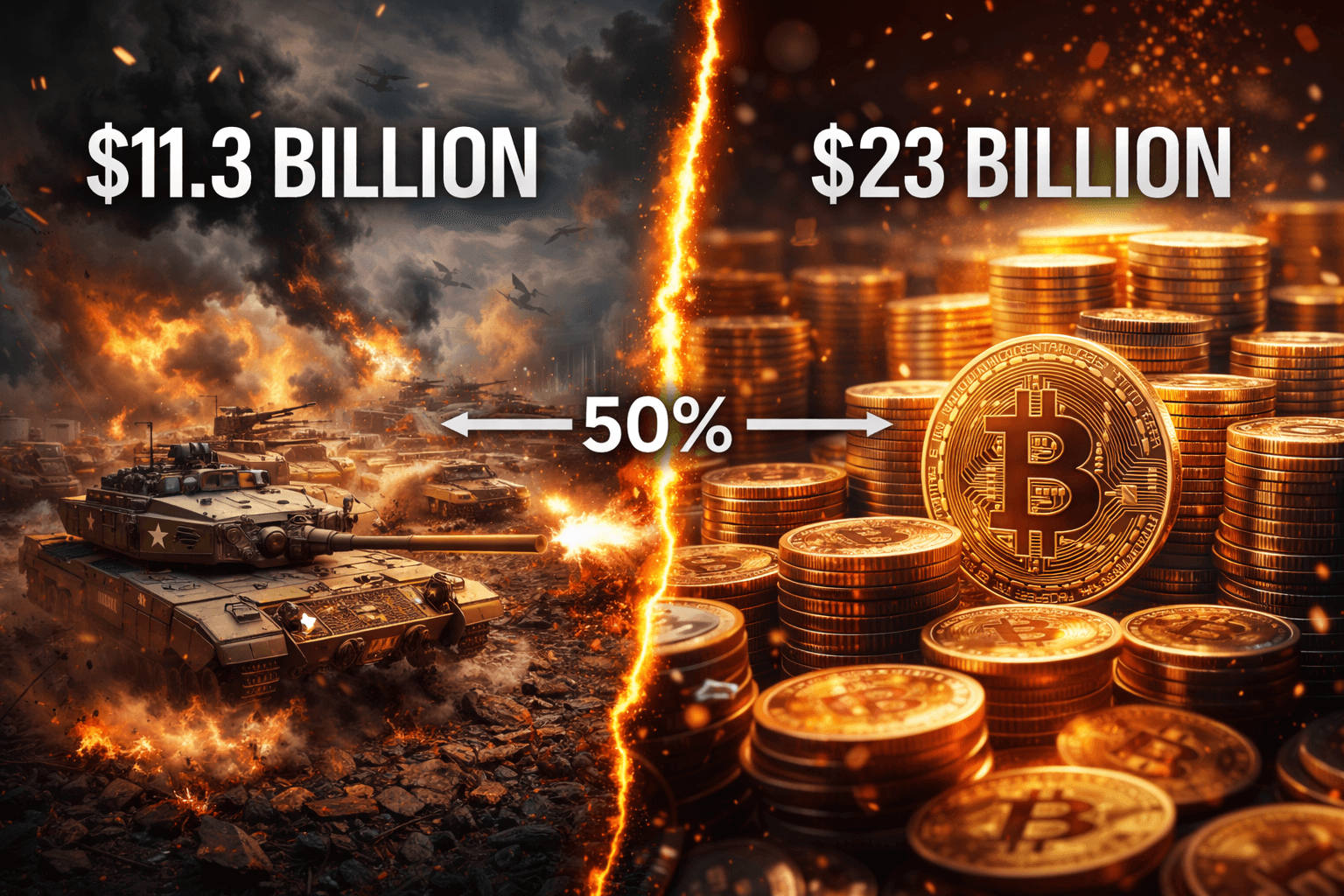
Iran War Spending Equals Half the Value of the U.S. Bitcoin Reserve in Just Six Days
1 min read · 14 Mar 2026

Prosecutors Push to Retry Tornado Cash Co-Founder Even as Washington Softens on Crypto Privacy
1 min read · 12 Mar 2026

Forget CPI and ETFs Oil Prices May Now Be the Biggest Signal for Bitcoin
1 min read · 8 Mar 2026

How SK Telecom Is Rebuilding Itself Around AI at MWC 2026
1 min read · 3 Mar 2026

Dubai and the UAE on the Frontlines: How the Iran Israel Conflict Has Reverberated Across a Global Hub
1 min read · 3 Mar 2026

US and Israel Military Strikes on Iran and the Escalation of Conflict in the Middle East
1 min read · 28 Feb 2026