
Why Even the Most Valuable Blockchain Still Relies on Fragile Internet Infrastructure In late 2025 the Ethereum network remained one of the most valuable and widely used blockchains in the world with more than $74 billion worth of digital assets secured by its consensus and smart contract ecosystem. Despite this massive economic footprint and the […]
In late 2025 the Ethereum network remained one of the most valuable and widely used blockchains in the world with more than $74 billion worth of digital assets secured by its consensus and smart contract ecosystem. Despite this massive economic footprint and the deep technical resilience built into its decentralized design the reality for everyday users and developers is that access to that network often still depends on Web2 infrastructure such as centralized service providers API gateways and internet connectivity that can break or be switched off at any time.
Ethereum’s core protocol the ledger and consensus mechanisms that ensure transactions are valid and assets are safe does not depend on any single company or server. The value locked in smart contracts and the millions of ETH staked as part of Ethereum’s proof of stake validation are protected by cryptographic security and thousands of independent nodes around the world that verify and propagate data. This on-chain security model is the reason Ethereum can sustain such a high valuation and broad usage across decentralized finance applications NFTs and global payments.
Yet for most users interacting with Ethereum applications today the experience begins long before a block is mined. People access wallets and decentralized applications using Web2 interfaces such as web browsers mobile apps and centralized API providers that connect them to the blockchain. Services like Infura Alchemy and other node as a service platforms host the infrastructure that relays user transactions to the Ethereum network and returns data for applications. If these services experience outages are blocked in certain regions or are hit by censorship events users can find themselves unable to see balances send transactions or interact with smart contracts even though the underlying blockchain continues to operate.
This dependency on Web2 points to a core tension in the architecture of Ethereum and many other blockchains: while the settlement layer and consensus are decentralized on chain the user experience layer remains heavily centralized. Centralization at this layer can include corporate-run web interfaces custodial wallets or API services that act as bridges between users and the decentralized protocol. When these centralized pieces fail users can be effectively cut off from the network they rely on for finance and digital ownership.
Historical examples have shown how fragile this bridge can be. In April 2022 a major outage at Infura one of the largest Ethereum API providers caused wallets and decentralized applications that depend on their service to stop working for many users until services were restored. Although the Ethereum blockchain itself was unaffected the user experience and access to decentralized services ground to a halt because of the Web2 dependency.
For developers and ecosystem builders this reality has spurred renewed interest in creating fully decentralized access layers that do not rely on any single provider or corporate infrastructure. Projects that focus on peer-to-peer networking distributed indexing and decentralized RPC (remote procedure call) services aim to let users connect directly to Ethereum nodes without passing through centralized gateways. These efforts are designed to ensure that even if a major service goes offline users can continue interacting with the blockchain seamlessly.
Beyond individual outages there are geopolitical and regulatory risks to consider. Blocks may be validated globally and the consensus remains robust even if part of the network is partitioned, but internet restrictions imposed by governments or network providers can limit who can reach blockchain endpoints. This means that access to decentralized networks like Ethereum can be constrained in minutes by actions that have nothing to do with the blockchain itself but rather with the underlying Web2 infrastructure that carries and serves traffic.
The implication for the future of blockchain adoption is profound. A fully resilient decentralized economy requires not only decentralized settlement but also decentralized connectivity that cannot be easily disrupted by single points of failure. This involves innovations in decentralized networking technology, broader adoption of peer-run nodes and services, and user tools that do not depend on centralized providers for access.
Despite these challenges Ethereum’s developers and community remain focused on strengthening the ecosystem at every layer. Efforts to build more distributed access points and remove reliance on a handful of infrastructure providers have accelerated in recent years as both technical and economic participants recognize that true decentralization must include the access layer, not just the consensus layer.
As the blockchain economy matures beyond speculative trading into widespread use cases like decentralized finance digital identity and global payments the resilience of access infrastructure will matter as much as the security of the ledger beneath it. Ethereum’s massive economic footprint demonstrates its success, but the reliance on Web2 underscores how far digital infrastructure still has to evolve before networks can be considered fully independent of centralized chokepoints.

Iran’s Five Demands Show This War Is Moving Further From Peace, Not Closer
1 min read · 25 Mar 2026

A $200 Billion Iran War Bill Shows Just How Big The Stakes Have Become
1 min read · 23 Mar 2026

War Between the U.S., Israel, and Iran Escalates as Conflict Enters Third Week
1 min read · 16 Mar 2026

Venice Biennale Under Fire Over Russian Presence
1 min read · 14 Mar 2026
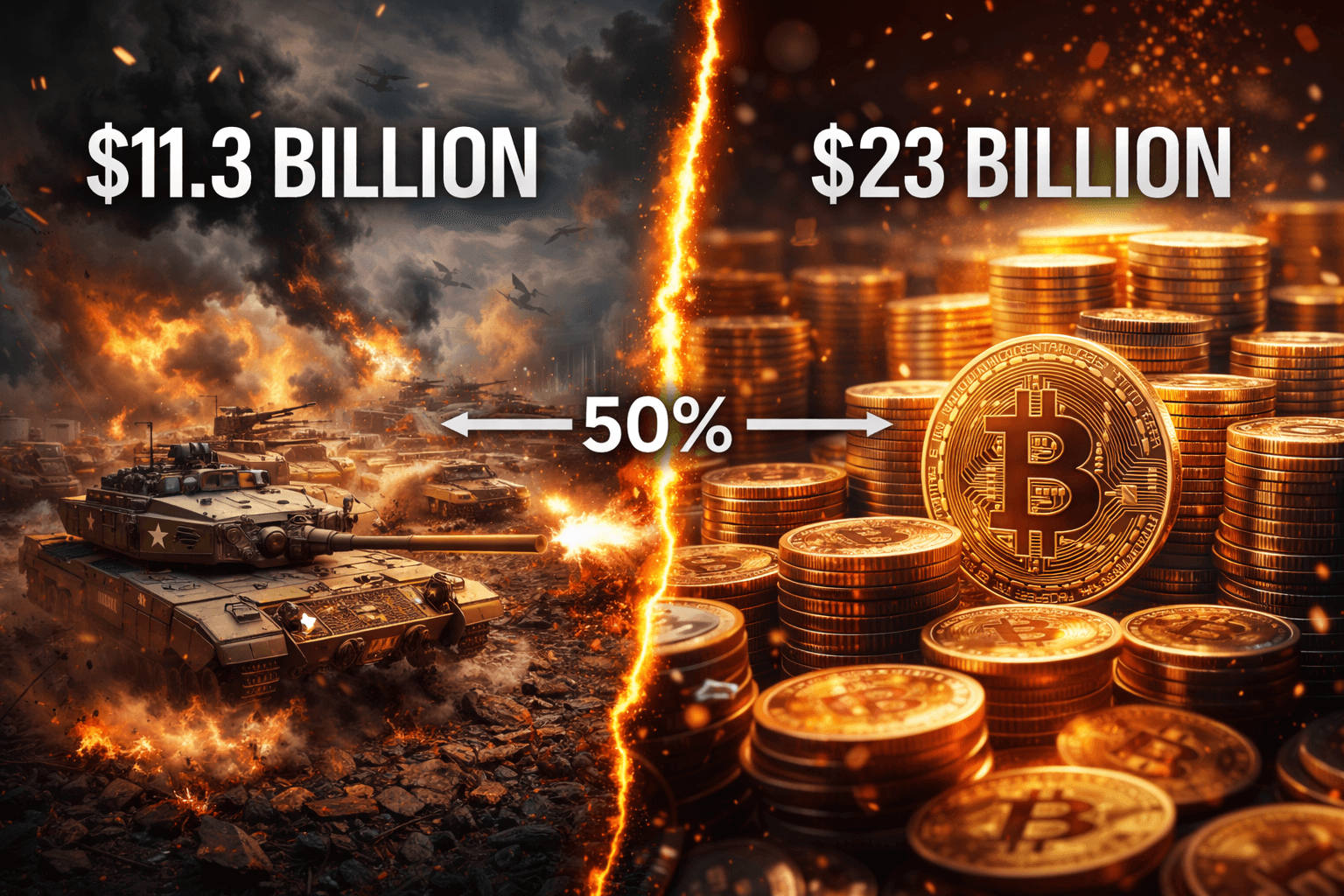
Iran War Spending Equals Half the Value of the U.S. Bitcoin Reserve in Just Six Days
1 min read · 14 Mar 2026

Prosecutors Push to Retry Tornado Cash Co-Founder Even as Washington Softens on Crypto Privacy
1 min read · 12 Mar 2026

Forget CPI and ETFs Oil Prices May Now Be the Biggest Signal for Bitcoin
1 min read · 8 Mar 2026

How SK Telecom Is Rebuilding Itself Around AI at MWC 2026
1 min read · 3 Mar 2026

Dubai and the UAE on the Frontlines: How the Iran Israel Conflict Has Reverberated Across a Global Hub
1 min read · 3 Mar 2026

US and Israel Military Strikes on Iran and the Escalation of Conflict in the Middle East
1 min read · 28 Feb 2026