

Why crypto’s big money story hides a deeper problem for experimentation A New Narrative for Crypto Growth In 2025 the cryptocurrency industry posted what looked like a big rebound. Headlines celebrated that over $50 billion in capital flowed into the ecosystem, suggesting robust growth and renewed investor confidence. From the outside it painted a picture […]
In 2025 the cryptocurrency industry posted what looked like a big rebound. Headlines celebrated that over $50 billion in capital flowed into the ecosystem, suggesting robust growth and renewed investor confidence. From the outside it painted a picture of a vibrant market ready to support new ideas, technologies, protocols and companies. But when you look closer at the numbers and what that capital actually meant, the story becomes more complicated. Instead of funding thousands of new projects, most of the money went into mergers and acquisitions, where established companies buy competitors or absorb promising but struggling startups. In this way, the industry’s apparent growth may be masking a much quieter reality: there are fewer fresh experiments getting funded, and consolidation among big players is silently reshaping the landscape of crypto innovation.
The $50 billion total from last year’s fundraising report combines several types of deals, and nearly half of that amount came from just 21 mergers and acquisitions. That means huge sums were spent on companies buying other companies rather than backing new ideas. Meanwhile, traditional venture capital and private investments accounted for under $25 billion through more than 800 deals, and public sales or IPOs made up a smaller share. Despite the head-turning headline, the total number of deals actually fell year over year, from over 1,600 in 2024 to around 1,400 in 2025. This reflects a clear trend: capital is moving toward consolidation instead of supporting a broad field of independent experiments and startups.
Mergers and acquisitions are nothing new in business. At their best they can help companies combine strengths, streamline operations, and accelerate adoption of useful technologies. In crypto, larger players may buy competitors to gain users, infrastructure or regulatory advantages. For example, major exchanges acquire smaller platforms to expand offerings, and established protocols acquire tooling firms to strengthen network support. This pattern reflects a maturing industry where some companies seek stability and scale. However, there is a trade-off. When more capital flows into buying existing projects and fewer resources are available for early-stage experiments, the diversity of ideas in the ecosystem shrinks. Novel protocols, radical governance models and experimental decentralized applications may struggle to survive if investors see them as higher risk than consolidation plays.
One clear data point is that funding rounds and venture capital deals declined, even as average deal sizes climbed. Fewer deals overall means that while large investments still happen, they are concentrated in a smaller group of winners. This is a classic pattern seen in many maturing industries: once the easy gains from early innovation are realized, investors turn toward businesses that have proven revenue, compliance frameworks and established markets. But for crypto, a space that has historically thrived on boundary-pushing ideas, this shift carries a cost. Projects that miss out on funding rounds may find themselves acquired or sidelined before they can challenge incumbents or bring truly new approaches to market.
Consolidation does not automatically mean stagnation. It can lead to stronger, more resilient infrastructure that supports widespread adoption. When established firms absorb competitors or niche technologies, they may bring more resources and professional management to those assets. In some cases that can lead to better user experiences, improved compliance and greater integration with mainstream finance. But there is a concern that crypto innovation will become less experimental and more about incremental improvements to existing frameworks.
The industry may be at a crossroads. On one side, prolonged consolidation could establish clearer financial rails and safer, more regulated systems that appeal to institutional investors. On the other, if the ecosystem discourages bold new ideas because resources favor well-known players, then the crypto world could look more like traditional finance and less like a space of creative disruption.
Looking back at earlier phases of crypto helps illustrate why this moment matters. In the early years, projects like The DAO embodied radical experiments in decentralized governance and funding. The DAO raised a huge amount of Ether through a token sale and proposed a new way of organizing capital and decision-making, though it ultimately failed due to security flaws. Its legacy is a reminder of how open innovation once drove rapid exploration of alternative models for finance and organization. Today’s shift toward consolidation contrasts sharply with that spirit of wide-ranging experimentation, raising questions about where the next big breakthroughs will come from.
For entrepreneurs and developers in the crypto space, the current trend demands adaptability. New projects must demonstrate clear paths to real-world utility, strong economic models and ways to navigate regulatory environments. Investors, too, may need to balance portfolios between established players with stable income and emerging teams with forward-thinking ideas. Supporting early-stage innovation requires tolerance for risk and a long-term perspective, because the biggest breakthroughs often come from projects that challenge assumptions rather than consolidate existing ones.
The broader community also plays a role. Open source development, community governance models, and decentralized protocols rely on participation from users, contributors and token holders. By engaging with newer projects, advocating for inclusive funding frameworks, and embracing diversity in technical approaches, the crypto ecosystem can retain some of its experimental energy even as it grows.
The headline figure of $50.6 billion in capital might make the industry seem like it is booming, but the reality beneath it shows a sector in transformation. Capital flows into mergers and acquisitions suggest a market that values consolidation and scale, but this comes with fewer independent ventures receiving funding. Whether this shift continues or a new wave of experimentation rises alongside bigger players will shape the next chapter of crypto’s evolution. The future of blockchain innovation depends not just on the size of investment totals, but on how widely that capital is distributed and how many new ideas it helps flourish.

Iran’s Five Demands Show This War Is Moving Further From Peace, Not Closer
1 min read · 25 Mar 2026

A $200 Billion Iran War Bill Shows Just How Big The Stakes Have Become
1 min read · 23 Mar 2026

War Between the U.S., Israel, and Iran Escalates as Conflict Enters Third Week
1 min read · 16 Mar 2026

Venice Biennale Under Fire Over Russian Presence
1 min read · 14 Mar 2026
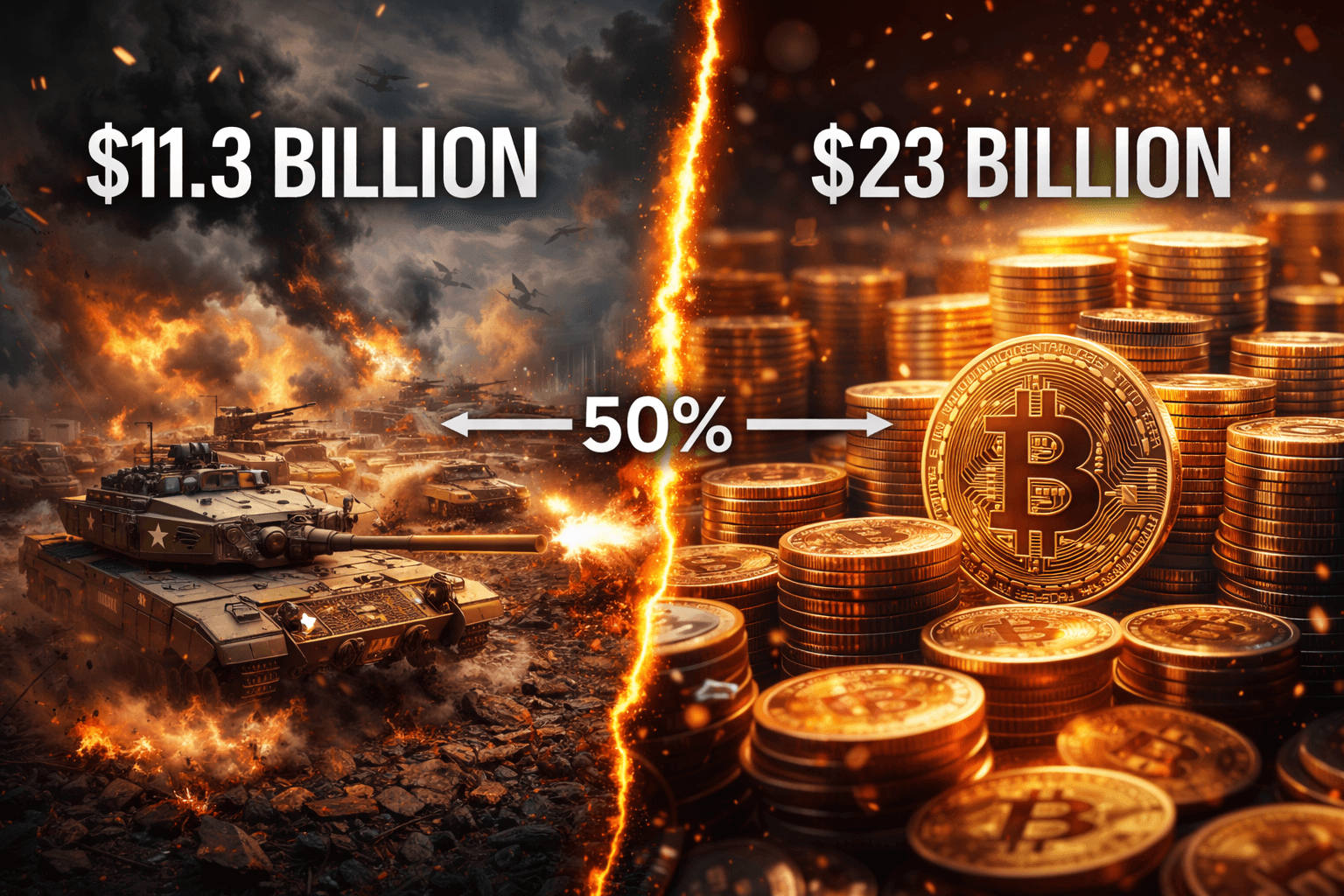
Iran War Spending Equals Half the Value of the U.S. Bitcoin Reserve in Just Six Days
1 min read · 14 Mar 2026

Prosecutors Push to Retry Tornado Cash Co-Founder Even as Washington Softens on Crypto Privacy
1 min read · 12 Mar 2026

Forget CPI and ETFs Oil Prices May Now Be the Biggest Signal for Bitcoin
1 min read · 8 Mar 2026

How SK Telecom Is Rebuilding Itself Around AI at MWC 2026
1 min read · 3 Mar 2026

Dubai and the UAE on the Frontlines: How the Iran Israel Conflict Has Reverberated Across a Global Hub
1 min read · 3 Mar 2026

US and Israel Military Strikes on Iran and the Escalation of Conflict in the Middle East
1 min read · 28 Feb 2026