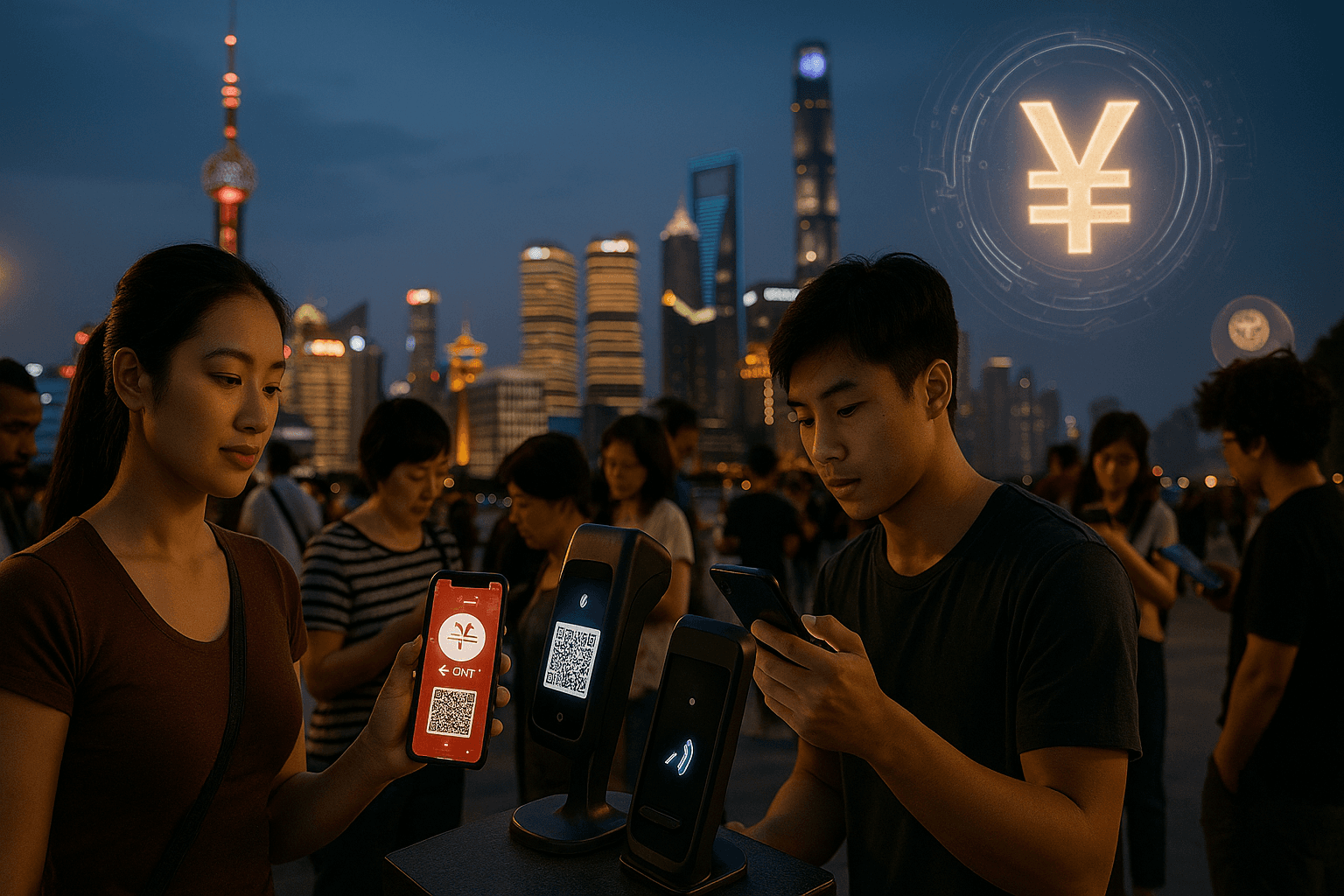

China’s making its move. The PBOC is done testing the digital yuan and is setting up an international hub in Shanghai to run it worldwide. This isn’t just another tech rollout it’s a statement of intent. Beijing wants a seat at the table where the world’s money moves. The plan’s clear enough one central nerve […]
China’s making its move. The PBOC is done testing the digital yuan and is setting up an international hub in Shanghai to run it worldwide. This isn’t just another tech rollout it’s a statement of intent. Beijing wants a seat at the table where the world’s money moves.
The plan’s clear enough one central nerve center to handle global e-CNY payments, link with foreign banks, and test new financial tech. It’s the digital yuan’s control tower, built to take the system from pilot to production.
Why now? Because cross border payments are still a slog slow, costly, and tangled in geopolitics. China’s tired of waiting on Western systems. By building its own network, it’s carving out independence and maybe even an edge. Control the rails, and you don’t have to ask permission to use them.
And Shanghai? Perfect choice. It’s already China’s fintech capital. The new hub will likely tie into CIPS, connect with blockchain networks, and run through real time APIs. Foreign banks are already peeking in, and when the math makes sense, they’ll plug in too.
If it all works, the effects will start quietly faster payments, lower fees, smoother trade. Emerging markets wanting cheaper, easier rails might hop on first. Slowly, as more trade invoices flip to RMB, the dollar’s dominance could start to soften not with a bang, but a steady drift.
Of course, it won’t all go smoothly. Expect pushback from U.S. aligned countries, privacy concerns, and plenty of cyberattacks testing the system’s armor. Still, China’s betting that the benefits outweigh the risks—and that once businesses taste faster, cheaper payments, they’ll stay.
For crypto, this is the state’s version of disruption. The e-CNY isn’t a rebellion it’s regulation with an upgrade. It’ll go head-to-head with stablecoins, offering speed and certainty wrapped in government backing.
The next wave starts in Shanghai’s Lingang zone, where pilots in trade finance and supply chain payments will run. More banks will join, analytics will expand, and other nations will respond with their own CBDC plays.
For exporters, the upside is real faster settlements and less friction. For policymakers, it’s diplomacy coded in software. For investors, it’s a signal that money’s infrastructure is shifting underfoot.
The big picture? China’s not just building a new payment system it’s redrawing the map of global finance. The architecture of money is changing, and from a command post in Shanghai, the digital yuan is stepping onto the main stage.
-300x200.png&w=3840&q=75)
The CLARITY Act fight shows banks are worried about stablecoins, not just crypto
1 min read · 9 May 2026
-300x200.png&w=3840&q=75)
The SEC’s crypto shift is really about whether old market rules can bend without breaking
1 min read · 8 May 2026
-300x200.png&w=3840&q=75)
Coinbase’s $300B dream still has to pass the boring infrastructure test
1 min read · 7 May 2026

Zcash’s rally shows privacy crypto is no longer hiding in the corner
1 min read · 7 May 2026
-300x200.png&w=3840&q=75)
Safe DeFi now starts with asking what can break before your money goes in
1 min read · 6 May 2026
-300x200.png&w=3840&q=75)
The CLARITY Act fight is really about who gets to hold the next dollar
1 min read · 6 May 2026
-1-300x200.png&w=3840&q=75)
Ethereum staking is becoming a Wall Street balance sheet business
1 min read · 5 May 2026

Bitcoin’s next test is not crypto, it is the bond market
1 min read · 4 May 2026

The stablecoin deal is really about who controls the next financial system
1 min read · 4 May 2026
-1-300x200.png&w=3840&q=75)
Dormant Ethereum wallets show the danger of old crypto secrets
1 min read · 1 May 2026