
Why Fear-Driven Headlines Missed the Real Story Behind Bitcoin’s Resilience In 2025, Bitcoin faced repeated waves of pessimism, with commentators and analysts proclaiming its demise four separate times often tied to sharp price dips, macro turbulence, or speculative narrative breakdowns. Yet while sensational headlines dominated social feeds, a quieter transformation was unfolding beneath the surface: […]
In 2025, Bitcoin faced repeated waves of pessimism, with commentators and analysts proclaiming its demise four separate times often tied to sharp price dips, macro turbulence, or speculative narrative breakdowns. Yet while sensational headlines dominated social feeds, a quieter transformation was unfolding beneath the surface: an unprecedented boom in Bitcoin infrastructure investment, adoption of mining and node technologies, and real-world integration of BTC into financial systems. This hidden growth tells a far more resilient and optimistic story than the “Bitcoin is dead” headlines would suggest, and underscores the difference between momentary price psychology and structural network strength.
Critics in 2025 pointed to volatility as evidence of Bitcoin’s fragility. Each sharp retracement was packaged as proof that Bitcoin’s narrative had failed, or that newer assets had overtaken it in relevance. But digging deeper into on-chain data and ecosystem metrics reveals that many of these retracements were liquidity-driven resets, where short-term traders exited positions and longer-term stakeholders including institutions continued to build positions, expand infrastructure, and fortify participation.
One of the clearest indicators of this resilience showed up in infrastructure expansion: mining facilities scaled up, node deployments increased in key jurisdictions, and enterprise-grade custody networks entered or expanded in the space. Institutional players, including banks and fintech firms, began piloting or deploying Bitcoin settlement rails, custody offerings, and integration with traditional finance systems moves that require long planning cycles and regulatory compliance, not short-term speculation.
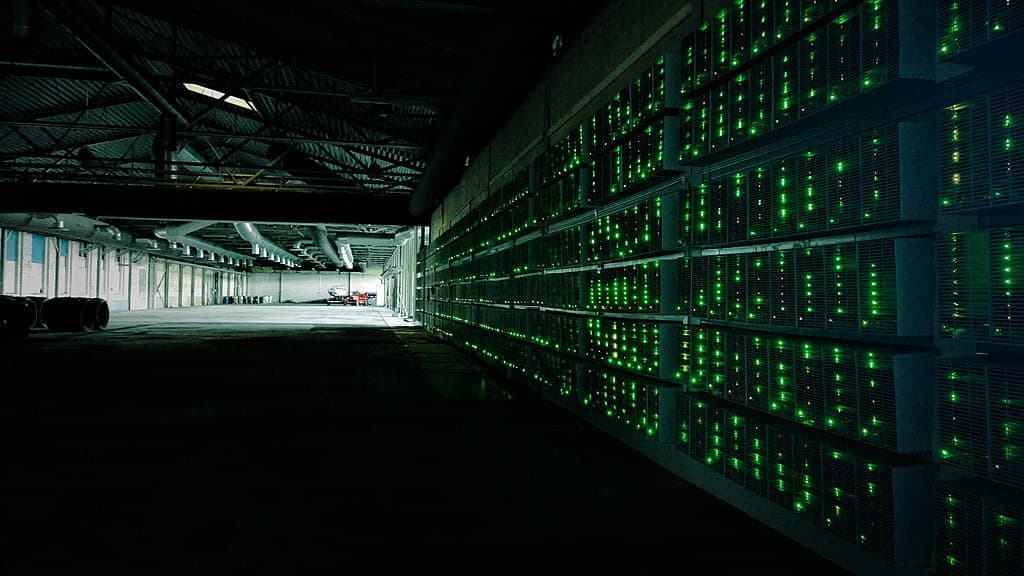
The mining landscape also saw significant evolution. As prices fluctuated, mining hash rate a measure of total computational power securing the network continued to climb, demonstrating ongoing capital investment and confidence in Bitcoin’s long-term security model. New mining centers came online, deploying more efficient rigs and tapping into renewable energy sources, signaling a maturation of the network’s physical backbone even as price narratives oscillated.
Bitcoin’s narrative in 2025 wasn’t just about price charts it was also about integration into financial and payment infrastructure. Several markets saw expanded use of Bitcoin for cross-border settlement, merchant adoption in select regions, and development of regulated financial products tied to BTC exposure. These developments often don’t make “death of Bitcoin” headlines, yet they represent real advances in utility and legitimacy.
On the institutional front, sophisticated allocators including family offices, hedge funds, and asset managers continued to view Bitcoin as a digital store of value and portfolio diversifier. While price swings tested risk models and trading strategies, long-term allocation thesis remained intact for many strategists who distinguished between short-term volatility and long-term value accrual mechanisms inherent in Bitcoin’s fixed supply and decentralized consensus.
At the retail level, too, the ecosystem strengthened in subtle ways. Developer communities remained active, building tooling, wallets, and educational resources. Layer-2 integrations and application layers that use Bitcoin as a settlement or collateral layer gained traction, illustrating that Bitcoin’s utility extends beyond a single price metric.
The repeated proclamations of Bitcoin’s “death” often centered on narratives external to the network’s fundamental trajectory. Macro headlines about inflation, interest rates, banking stress, or geopolitical uncertainty made for catchy headlines but didn’t account for how Bitcoin’s distributed network operates independently of those cycles. When price retreated, miners held or optimized operations; when liquidations occurred, long-term holders accumulated; and when markets stabilized, infrastructure buildouts continued unabated.
This resilience is rooted in Bitcoin’s network effects, which amplify incremental advances into broader ecosystem momentum. Even as price volatility dominated news cycles, developer engagement, institutional interest, and infrastructure maturation kept growing. These factors contribute to a foundation that isn’t easily dismantled by short-term narrative shocks underscoring why Bitcoin has repeatedly weathered past cycles of fear, fraud, and FUD.
In many ways, 2025 represented a recalibration of expectations. Instead of parabolic rallies followed by dramatic sell-offs, Bitcoin’s market behavior reflected a more nuanced interaction between liquidity flow, adoption cadence, and structural strengthening. Each “Bitcoin is dead” moment was followed not by collapse, but by deeper engagement from network participants who value utility, security, and decentralization over speculation alone.
Looking ahead, the lessons from 2025 are clear: Bitcoin’s resilience isn’t measured by how it performs in every trading session it’s measured by how its ecosystem evolves in the face of skepticism. The infrastructure boom from mining hash rate increases to custody expansion and enterprise integration points toward a network that’s building for the long haul. That’s why, even when critics proclaim its death, Bitcoin’s fundamentals continue to tell a story of growth, not demise.
-1-300x200.png&w=3840&q=75)
Visa is quietly moving stablecoins into the back office of money
1 min read · 30 Apr 2026
-300x200.png&w=3840&q=75)
Europe’s mythos problem is really a security problem
1 min read · 21 Apr 2026
-300x200.png&w=3840&q=75)
SpaceX’s Cursor move is not just about buying a startup
1 min read · 21 Apr 2026

YouTube’s Creator Future Is Starting to Look Less Like Hollywood and More Like a High End Home Studio Economy
1 min read · 29 Mar 2026

Wall Street’s Tokenization Rush Is Not a Crypto Victory, It Is a Rewrite of Finance Designed to Keep the Old Gatekeepers in Charge
1 min read · 29 Mar 2026

India’s Semaglutide Shock Could Redraw the Global Weight Loss Drug Market
1 min read · 28 Mar 2026

Milady, Loyalty, and Ethereum’s Identity Fight Are Exposing a Much Deeper Cultural Split
1 min read · 28 Mar 2026

David Sacks Leaves the White House With a Crypto Record That Helped Banks More Than Bitcoin
1 min read · 28 Mar 2026

XRP ETFs Just Flipped. And That Shift Might Matter More Than The Rally
1 min read · 27 Mar 2026

One Nation’s New Surge Looks Bigger Than a Protest Spike Because the Structural Cracks in Australian Politics Are Getting Harder to Ignore
1 min read · 27 Mar 2026