

AI Is Stealing Crypto’s Spotlight: How $300B AI Deals and Miner Pivots Are Reshaping Liquidity AI has emerged as the new gravity well of global finance, and crypto is feeling its gravitational pull more than ever. Over the past year, investors loaded the space with more capital than ever before in AI infrastructure, data centers, […]
AI has emerged as the new gravity well of global finance, and crypto is feeling its gravitational pull more than ever. Over the past year, investors loaded the space with more capital than ever before in AI infrastructure, data centers, model labs, and semiconductor giants. Oracle announcing its $300 billion cloud commitment to OpenAI only cemented how big it is and confirmed how massive the AI wave is although the market reversed around and erased that same market cap in a brutal correction later.
That represented another layer of change: the type of capital that previously flowed into altcoins and DeFi tokens is now moving quickly toward AI at a rate crypto hasn’t seen since the NFT boom. Everyone is asking the same question is AI sucking liquidity out of crypto, or is crypto being forced to evolve? For years, the default home for speculative tech money was crypto. If you wanted a high-risk, high-reward bet, you purchased Ethereum, swam into a DeFi pool, or made the “ETH-killer” gamble. Then came a storyline in which AI sounded cleaner and bigger and faster-growing. Instead of “this token might be useful,” investors heard “this model could reshape every industry on Earth.” AI also arrived along with something crypto often doesn’t: clearer business models, conventional valuations, and corporate demand based on actual revenue. For many, the choice can be easily made when big funds compare an AI datacenter investment with a token that is still trying to work through governance issues.
That change has been sucking speculative energy from the long tail of crypto’s holdings, leaving many tokens thinner and more fragile than they were just two years ago. The liquidity drain is nowhere more apparent than in altcoins. Order books are smaller, trades run through markets faster, and stories become buried in days rather than weeks. Even mid-cap tokens face some volume issues in the absence of riding the hype around AI themselves. At the same time, interest has gravitated toward crypto projects that lay a claim near AI infrastructure, such as Chainlink and other oracle networks.
These picks and shovels plays feel safer to investors because they produce real usage and they work in parallel with both AI and tokenized finance. With the increasing reliance on verifiable data for AI systems, oracles are the bridge to provide the trusted information on blockchains to the next platform a company can use. Instead of battling AI, these infrastructure-layer tokens have come to embrace being on AI’s side. Inside Bitcoin itself AI is reshaping one of the largest sectors of the currency.
Following the 2024 halving and squeeze on margins squeezing mining, miners started quietly reorienting their facilities toward AI compute. They already own cheap power, cooling, and industrial space, so converting mines from ASIC miners into GPU clusters is a natural progression. Many of the biggest public miners will now derive some of their revenue from contracts with AI or HPCs. This transition also allows miners to sell BTC less often to meet costs, which can reduce sell pressure on the underlying cryptocurrency over time. But it also links Bitcoin’s security budget to the economics of AI: If AI becomes more profitable than mining, miners might emphasize compute workloads over hashrate expansion in the long term, which poses long-term questions about network incentives.
A more muted sign of the liquidity shift is the silence of corporate buyers of Bitcoin. No new public companies have added BTC on their balance sheets for months. This pause doesn’t mean people are losing faith it means they are paying the cost of their interest. Boards now are weighing the relative utility of a Bitcoin treasury allocation against investments that appear to suggest more robust growth and clearer return paths with regard to AI infrastructure. When capital is cautious, AI wins the game a little more than the other side. Yet it’s insufficient to say AI is “killing” crypto.
What’s taking place is that AI is raising the bar. The days when a token could go purely on vibes are fading. Investors are seeking clear revenue, real utility, and measurable demand. Stablecoin issuers, oracle networks, rollups, and DeFi protocols that actually generate fees all make sense within this new norm. The rest don’t know how to catch up. In effect, AI is turning crypto into a maturing game one where the stuff matters on equal footing with the hype. To be honest, the future is not likely just a tale of AI or crypto for the better; the future won’t be AI or crypto when you can combine them. AI bots will handle wallets, adjust gas charges, and scout for fraud. Artificial intelligence-based oracles will contribute data to smart contracts which will also improve the efficiency of on-chain markets. DeFi protocols will employ AI to determine risk and price their loans and maintain liquidity. Instead of draining crypto forever, AI would make blockchain systems smarter and safer, bringing more users into the universe.
So yes AI is draining liquidity from crypto. But it’s not a fatal drain. It’s a recalibration. The money that was previously blind to the fundamentals is now calling for clarity and maturity. Projects that will actually take advantage of AI, provide genuine infrastructure or even develop financial rails for meaningful use will be successful. The ones that hang on thin narratives will start withering away. And as AI hype finally cools, some of that capital will return to crypto but this time smarter, more disciplined and more interested in networks that can literally scale.
Crypto isn’t dying from lack of liquidity. It’s getting a reality check. The future is in the hybrid world where AI is all about intelligence, crypto is about trust and the two strengthen each other.

Iran’s Five Demands Show This War Is Moving Further From Peace, Not Closer
1 min read · 25 Mar 2026

A $200 Billion Iran War Bill Shows Just How Big The Stakes Have Become
1 min read · 23 Mar 2026

War Between the U.S., Israel, and Iran Escalates as Conflict Enters Third Week
1 min read · 16 Mar 2026

Venice Biennale Under Fire Over Russian Presence
1 min read · 14 Mar 2026
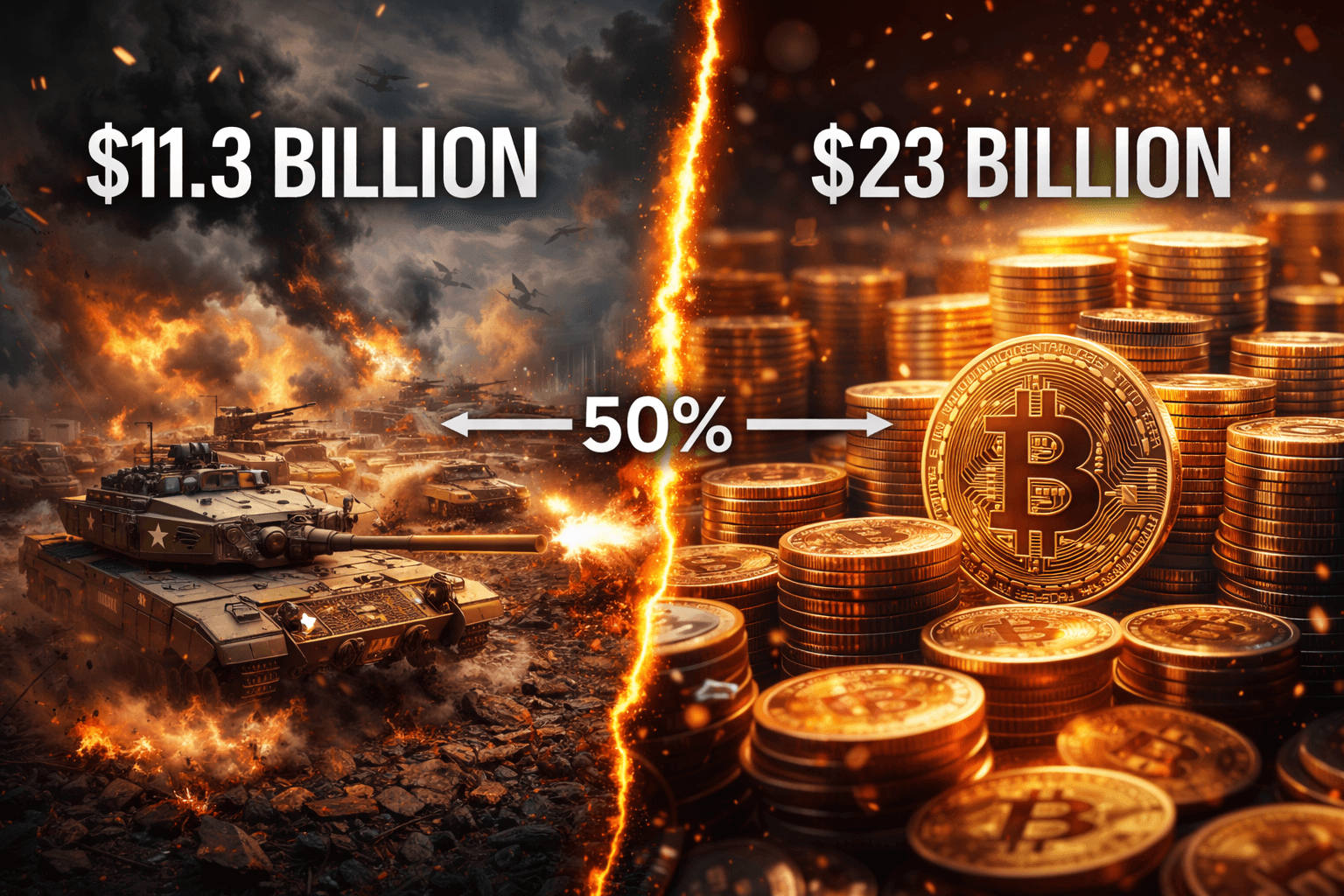
Iran War Spending Equals Half the Value of the U.S. Bitcoin Reserve in Just Six Days
1 min read · 14 Mar 2026

Prosecutors Push to Retry Tornado Cash Co-Founder Even as Washington Softens on Crypto Privacy
1 min read · 12 Mar 2026
Forget CPI and ETFs Oil Prices May Now Be the Biggest Signal for Bitcoin
1 min read · 8 Mar 2026

How SK Telecom Is Rebuilding Itself Around AI at MWC 2026
1 min read · 3 Mar 2026

Dubai and the UAE on the Frontlines: How the Iran Israel Conflict Has Reverberated Across a Global Hub
1 min read · 3 Mar 2026

US and Israel Military Strikes on Iran and the Escalation of Conflict in the Middle East
1 min read · 28 Feb 2026